
Your dream house stands tall for decades, but it all starts underground with the foundation. Choose wrong—like isolated footings on black cotton soil—and cracks appear within years, costing lakhs to fix. In India, where soils range from Rajasthan sands to Maharashtra’s expansive clays, understanding types of foundations used in residential buildings prevents disasters. This guide covers 8 key types (shallow and deep), soil matching, costs, and checklists so you build stable, not sorry.
Shallow Foundations: Simple and Cost-Effective for Stable Soils
Shallow foundations (depth <1.5–3m) transfer loads to near-surface soil with good bearing capacity (>150 kN/m²). They suit 80% of Indian G+1 homes on firm ground.
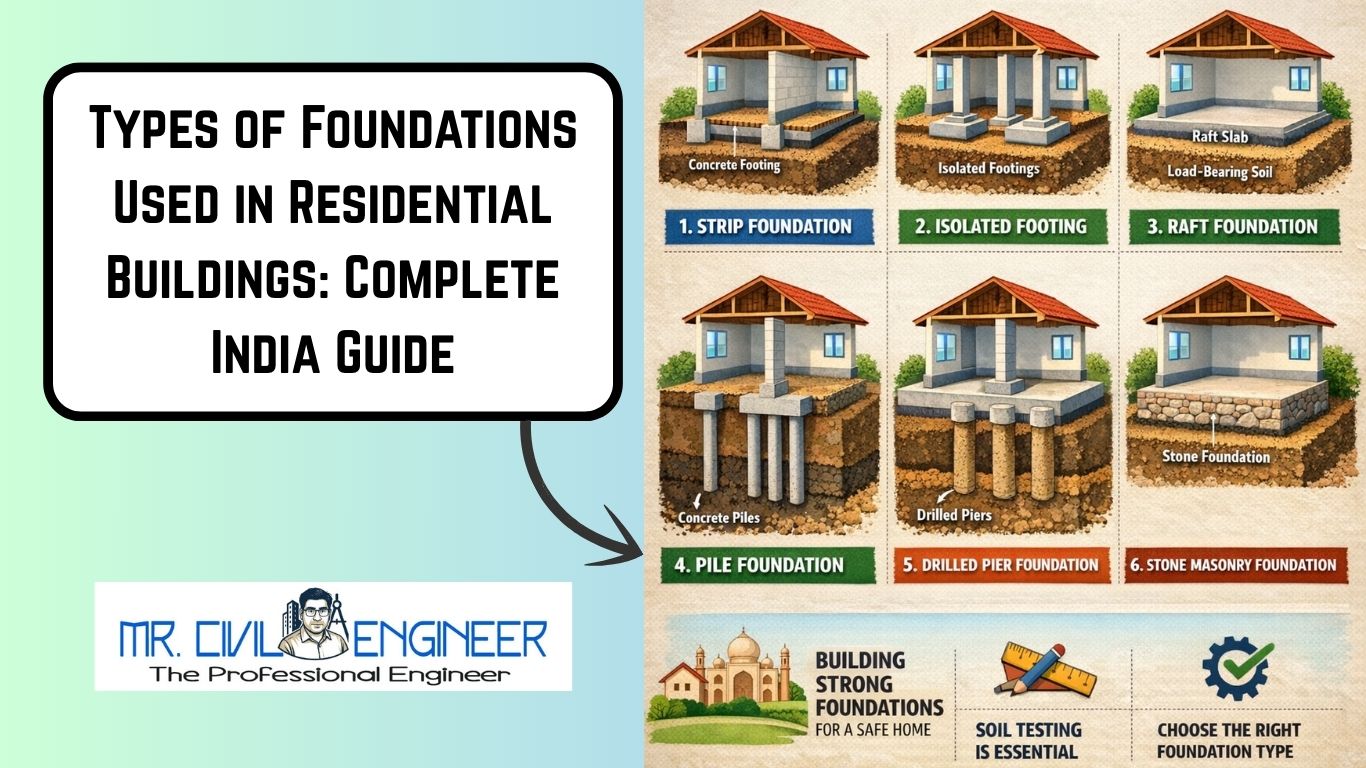
Individual pads under each column, square/rectangular (1–3m sides).
- Best for: Framed structures, good soil (sand, gravel). Common in North India homes.
- Pros: Cheap (₹150–250/sq m), quick to build.
- Cons: Not for close columns or weak soil.
- Example: G+1 house columns on 200 kN/m² soil—1.5×1.5m footings.
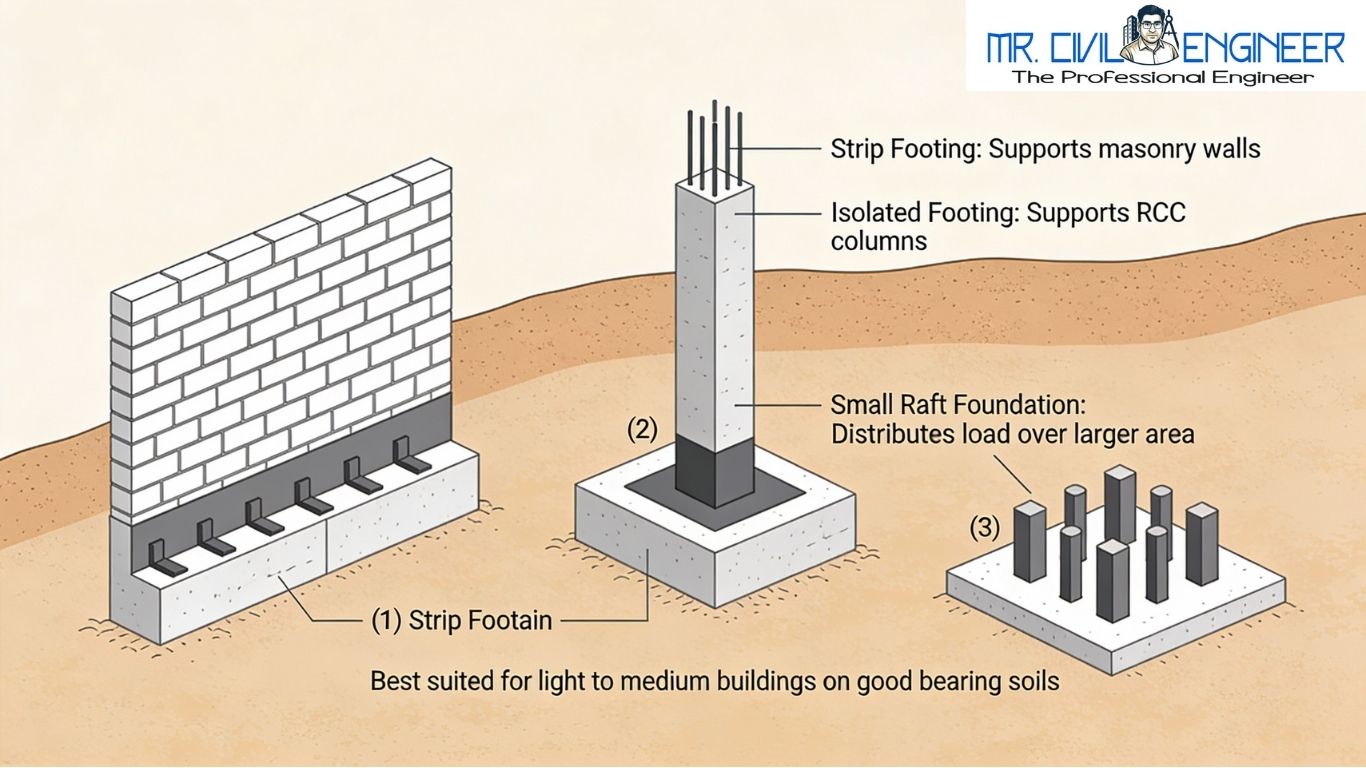
2. Strip Footing
Continuous under load-bearing walls, like a ribbon (0.6–1.2m wide).
- Best for: Load-bearing masonry homes, uniform walls (Rajasthan, Gujarat).
- Pros: Economical for row houses, good for moderate soils.
- Cons: Poor for point loads or expansive clays.
- Depth: 1–1.5m.
3. Combined Footing
Trapezoidal/rectangular joining 2+ close columns.
- Best for: Boundary columns or irregular layouts.
- Pros: Saves space vs separate footings.
- Cons: Complex design.
4. Raft (Mat) Foundation
Giant slab under entire building (covers 50–100% footprint).
- Best for: Soft soils, black cotton (expands/shrinks), high water table, basements.
- Pros: Even load spread, reduces differential settlement. Popular in Mumbai suburbs.
- Cons: Costly (₹400–600/sq m), more concrete.
- When?: Soil <100 kN/m² or columns <3–4m apart.
| Shallow Type | Soil Suitability | Cost/sq m | Building Height |
|---|---|---|---|
| Isolated | Firm (>150 kN/m²) | ₹150–300 | G+1–2 |
| Strip | Medium (100–200) | ₹200–350 | G+1 |
| Combined | Firm, close columns | ₹250–400 | G+1 |
| Raft | Soft (<100) | ₹400–700 | G+3+ |
Deep Foundations: Reach Strong Layers Below Weak Soil
Deep foundations (>3–10m+) bypass surface issues, transferring loads to bedrock or dense strata. Used for poor soils, high-rises, or seismic zones.
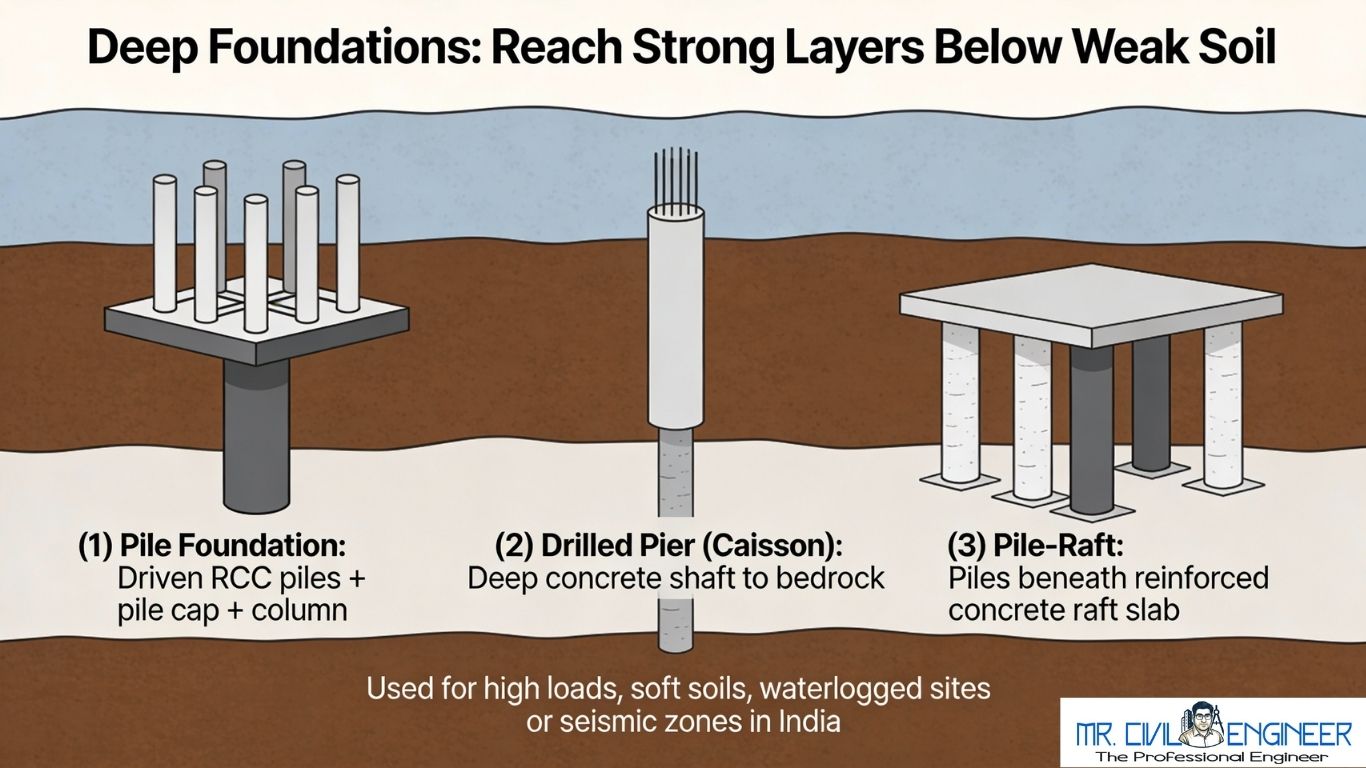
5. Pile Foundation
Long slender columns (concrete/steel/timber, 200–600mm dia, 10–30m deep). Driven/bored into ground.
- Best for: Very soft clays, coastal areas (Kerala, Chennai), multi-storey.
- Types: Bored cast-in-situ (common residential), driven precast.
- Pros: High capacity (50–500 tons/pile).
- Cons: Expensive (₹800–1,500/sq m), needs rigs.
- India use: 30% urban high-rises, black cotton soil homes.
6. Pier Foundation
Wide shafts (0.6–2m dia) drilled to hard strata, like mini-caissons.
- Best for: Rocky soils, small structures, hilly areas (Himachal).
- Pros: Less vibration than piles.
- Cons: Limited to accessible sites.
7. Caisson (Well) Foundation
Large hollow boxes sunk like wells, filled with concrete.
- Best for: Bridges, riverine areas (Ganga plains), deep water tables.
- Pros: Huge capacity.
- Cons: Rare for homes, very costly.
8. Grillage Foundation
Steel/concrete tiers spreading heavy column loads.
- Best for: Industrial but occasional heavy residential columns on loose soil.
- Pros: Quick for steel structures.
| Deep Type | Soil Suitability | Cost/sq m | Building Height |
|---|---|---|---|
| Pile | Very weak (<50 kN/m²) | ₹800–2,000 | G+5+ |
| Pier | Medium-hard strata | ₹600–1,200 | G+2 |
| Caisson | Riverine/deep scour | ₹1,500+ | Special |
Indian Soils and Best Foundation Matches
India’s geology demands smart picks:
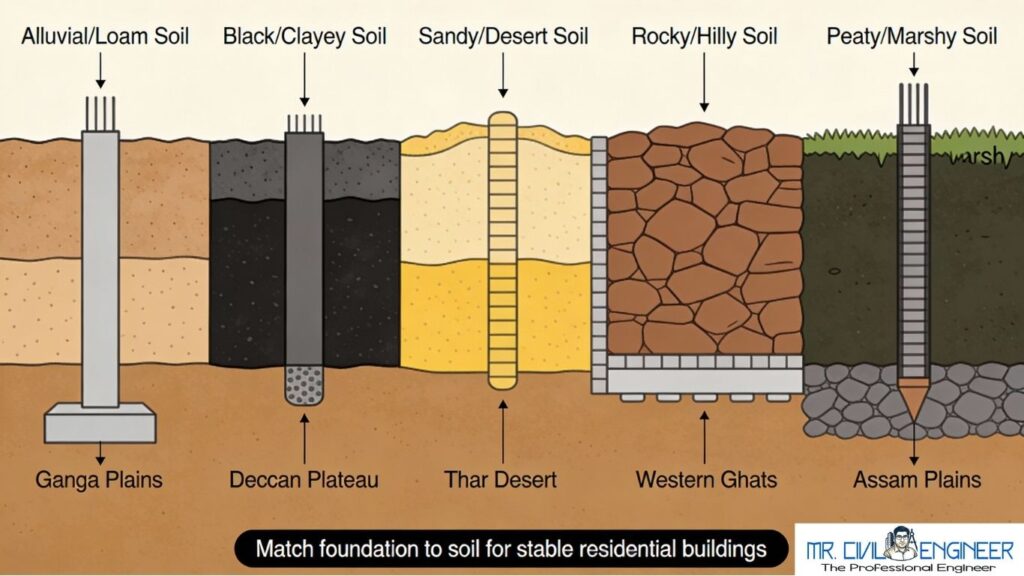
- Black Cotton (Maharashtra, MP): Expansive clay—raft or piles (avoids 50% settlement issues).
- Sandy (Rajasthan, Gujarat coast): Strip/isolated (high bearing, but check liquefaction).
- Alluvial (UP, Bihar): Raft/piles near rivers.
- Rocky (South India, hills): Shallow footings, piers.
- Coastal: Piles (corrosion-resistant).
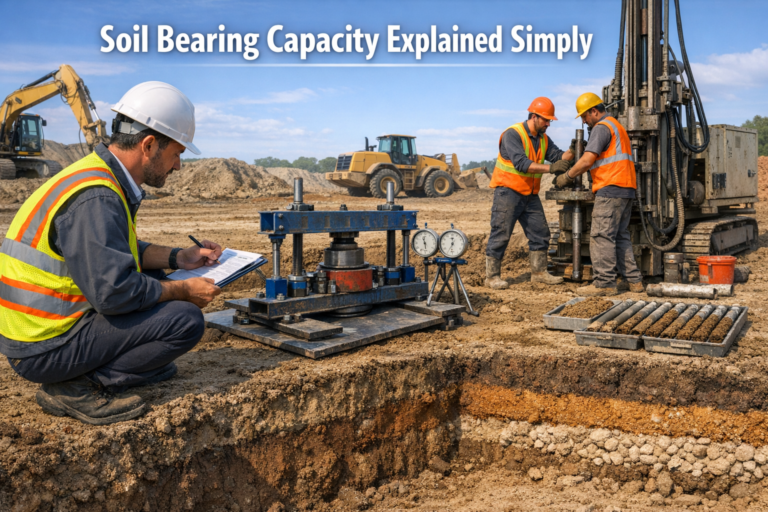
Must-do: Soil test (SPT/Plate load, ₹20–50k)—determines safe bearing capacity (SBC).
How to Choose the Right Foundation Type
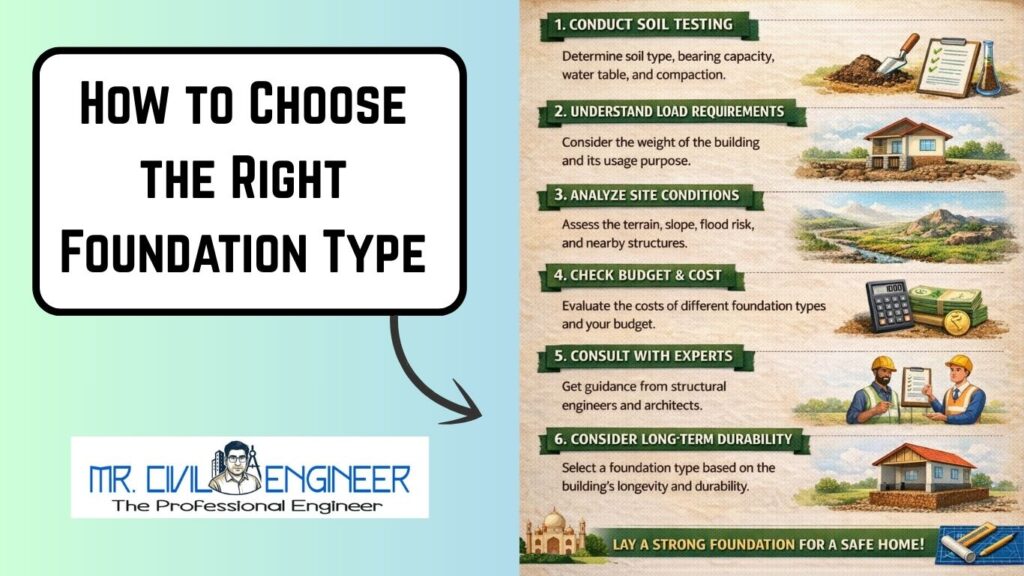
Decision tree:
- Soil test SBC >150 kN/m²? → Shallow (isolated/strip).
- 100–150 kN/m²? → Raft/combined.
- <100 kN/m²? → Deep (piles).
- High water table? → Piles/raft.
- G+3+? → Piles minimum.
Owner checklist:
- Structural engineer stamped design?
- Footing depth >frost line/water table?
- Minimum 50mm PCC bed + DPC?
- Cube tests for concrete?
Costs 2026: Shallow ₹150–700/sq m (10–15% total budget); deep 2–3x more.
Common Mistakes and Fixes
- Skipping soil test: 40% failures. Fix: Always test first ₹30k saves lakhs.
- Shallow on expansive soil: Cracks galore. Fix: Under-reamed piles for black cotton.
- Poor compaction: Settlement. Fix: 95% Proctor density.
- No waterproofing: Damp issues. Fix: Bitumen coat + DPC.
Real case: Pune home switched from isolated to raft after test—zero cracks after 5 years.
FAQs on Foundation Types
Most common foundation for Indian homes?
Isolated footings and strip for G+1 on firm soil.
Best foundation for black cotton soil?
Raft or under-reamed piles—handles expansion.
Shallow vs deep foundation—which for G+1 house?
Shallow if SBC >100 kN/m²; deep for poor soil.
Strongest residential foundation?
Pile or raft—distributes loads best.
Foundation cost for 1000 sq ft house?
₹2–5 lakhs shallow; ₹6–10 lakhs piles.
Conclusion: Right Foundation, Lifetime Stability
Types of foundations used in residential buildings aren’t one-size-fits-all—match soil, load, and budget for crack-free homes. Get that soil test, consult your engineer, and lay a base that lasts generations. Your house deserves it.