

Every monsoon, millions of Indian homes face the same enemy: roof leakage. It usually starts with a small damp patch on the ceiling. Within weeks, paint begins to peel, plaster cracks appear, and a musty smell fills the room. Many people ignore it until water starts dripping during heavy rain.
Roof leakage is not just an inconvenience — it is a warning sign that your building needs protection. That’s why choosing the right roof waterproofing solution in India is one of the most important maintenance decisions for homeowners and builders.
In this guide, you will learn:
- Why roof leakage happens
- Best waterproofing methods used in India
- Cost and application process
- How to choose the right waterproofing solution for your roof
What Causes Roof Leakage in India?
Roof leakage happens due to a combination of climate conditions and construction issues.
Common Causes:
- Hairline cracks in concrete slabs
- Water stagnation due to improper slope
- Damaged old waterproofing layers
- Thermal expansion and contraction
- Poor workmanship during construction
Climate Impact:
India’s climate makes leakage worse:
- High summer temperatures cause cracks
- Heavy monsoon rains force water into pores
- Humidity encourages fungus and mold
Over time, water reaches the steel reinforcement inside the slab and causes corrosion. This weakens the structure and shortens the life of the building.
Why Roof Waterproofing Is Essential
Roof waterproofing is not just cosmetic protection — it is structural insurance.
Benefits:
✔ Prevents water seepage
✔ Protects RCC slab
✔ Stops fungus and dampness
✔ Improves indoor air quality
✔ Reduces long-term repair cost
Example:
A small crack ignored today can become a full slab repair tomorrow. Waterproofing acts like a raincoat for your house — it doesn’t stop rain, but it stops rain from soaking in.
Types of Roof Waterproofing Solutions in India
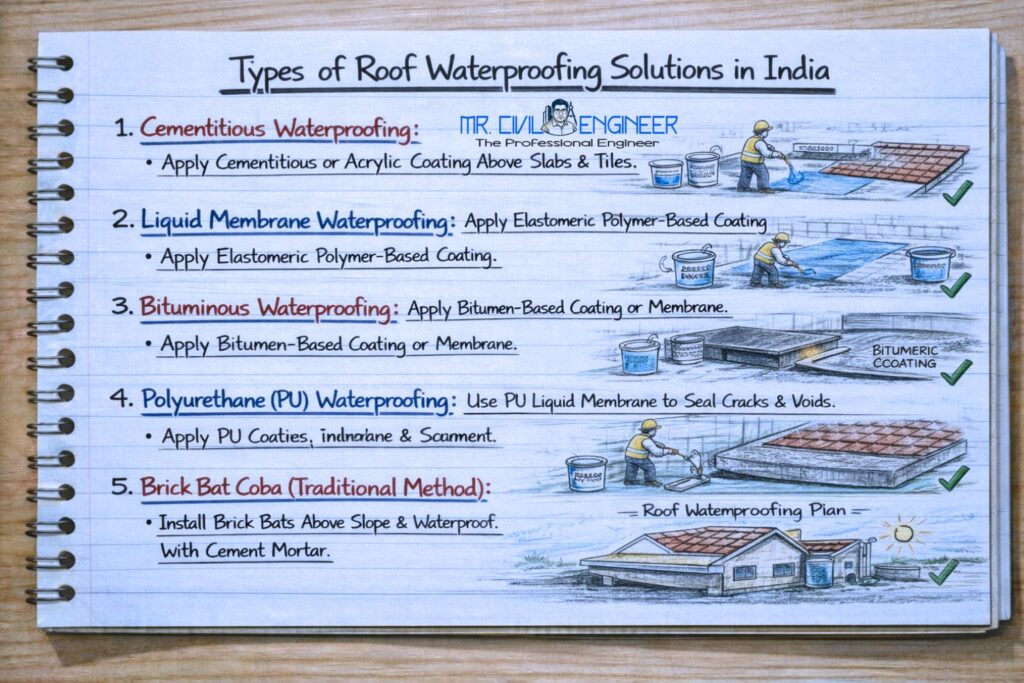
1. Cementitious Waterproofing
This method uses cement-based compounds mixed with waterproofing chemicals.
Advantages:
- Low cost
- Easy application
- Good for internal wet areas
Limitations:
- Not flexible
- May crack over time
2. Liquid Membrane Waterproofing
Applied like paint, it forms a rubber-like coating when dry.
Advantages:
- Seamless layer
- UV resistant
- Best for flat roofs
Popular choice for homes
3. Bituminous Waterproofing
Made from asphalt-based materials.
Advantages:
- Strong water resistance
- Used for industrial roofs
Limitations:
- Affected by sunlight
- Needs protective coating
4. Polyurethane (PU) Waterproofing
High-performance elastic coating.
Advantages:
- Crack-bridging ability
- Long life (10–15 years)
- Highly flexible
Best for premium long-term protection
5. Brick Bat Coba (Traditional Method)
Old Indian technique using broken bricks and lime concrete.
Advantages:
- Thick layer
- Traditional method
Limitations:
- Heavy load on slab
- Labor intensive
- Mostly replaced by modern systems
How to Choose the Best Waterproofing Method
| Factor | Recommendation |
|---|---|
| Flat RCC Roof | Liquid membrane or PU |
| Budget Option | Cementitious |
| Heavy Rain Area | PU or membrane |
| Terrace garden | PU coating |
| Old building | Liquid membrane |
👉 For most homes: Liquid membrane waterproofing offers best balance of cost and durability.
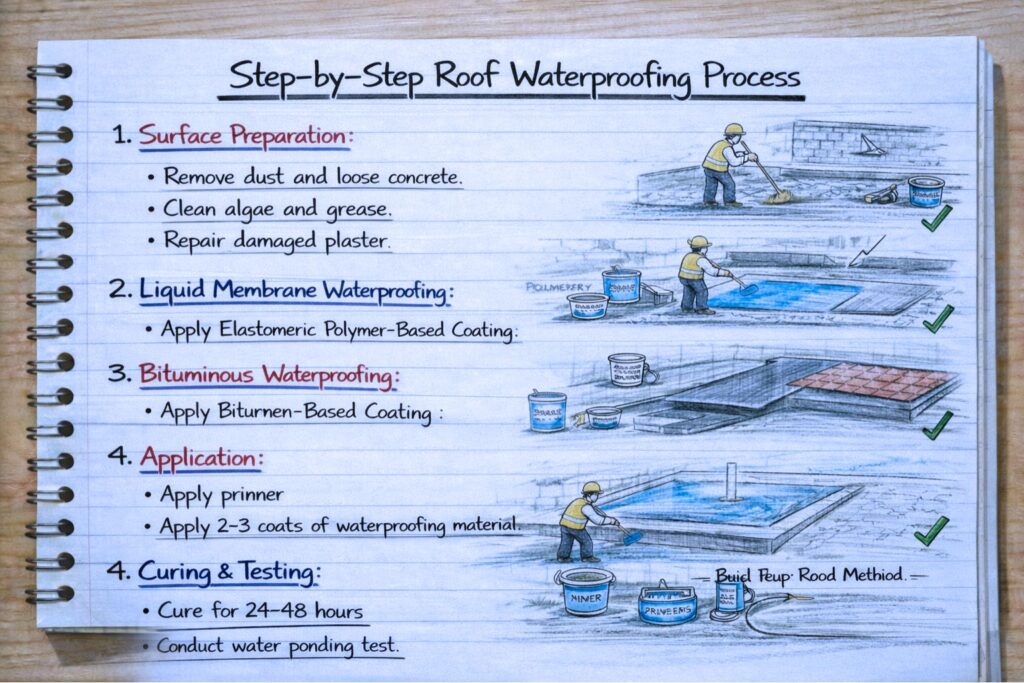
Step-by-Step Roof Waterproofing Process
Step 1: Surface Preparation
- Remove dust and loose concrete
- Clean algae and grease
- Repair damaged plaster
Step 2: Crack Treatment
- Fill cracks with polymer mortar
- Seal joints and corners
Step 3: Application
- Apply primer
- Apply 2–3 coats of waterproofing material
Step 4: Curing & Testing
- Cure for 24–48 hours
- Conduct water ponding test
Roof Waterproofing Cost in India
| Method | Approx Cost (₹/sq ft) |
|---|---|
| Cementitious | 40 – 70 |
| Liquid membrane | 70 – 120 |
| PU coating | 120 – 180 |
| Brick bat coba | 150 – 250 |
Cost Depends On:
- Roof condition
- Area size
- Labor cost
- Brand of material
Maintenance Tips After Waterproofing
- Clean terrace drains regularly
- Avoid drilling or hammering
- Inspect cracks every year
- Use protective tiles if possible
Common Mistakes to Avoid
❌ Waterproofing without cleaning surface
❌ Ignoring slope correction
❌ Using cheapest material only
❌ Skipping curing
❌ Waterproofing during rainy season
FAQs
Q1. Which waterproofing is best for Indian roofs?
Liquid membrane and PU waterproofing are most suitable.
Q2. How long does roof waterproofing last?
5–15 years depending on material and workmanship.
Q3. Can waterproofing be done in rainy season?
No, surface must be completely dry.
Q4. Is roof waterproofing permanent?
It is long-term, but periodic inspection is required.
Conclusion
Roof leakage is a slow poison for your building. It damages walls, weakens concrete, and creates unhealthy living conditions. With proper roof waterproofing solutions in India, you can protect your home from monsoon damage and avoid costly repairs.
Instead of waiting for visible damage, invest in waterproofing today and secure your home’s future.

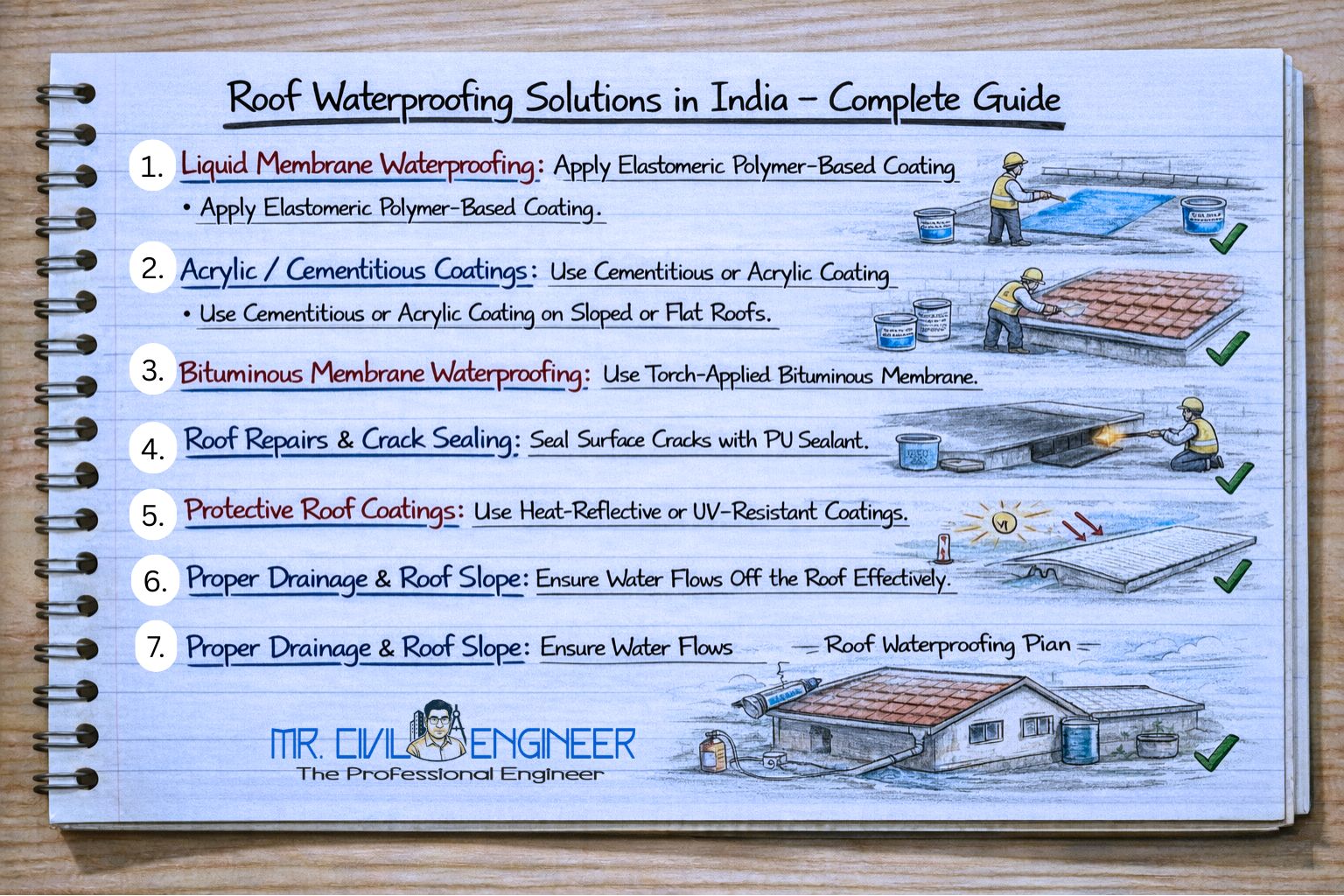
[…] Roof Waterproofing Solutions in India – Complete Guide […]
[…] Roof Waterproofing Solutions in India – Complete Guide […]