
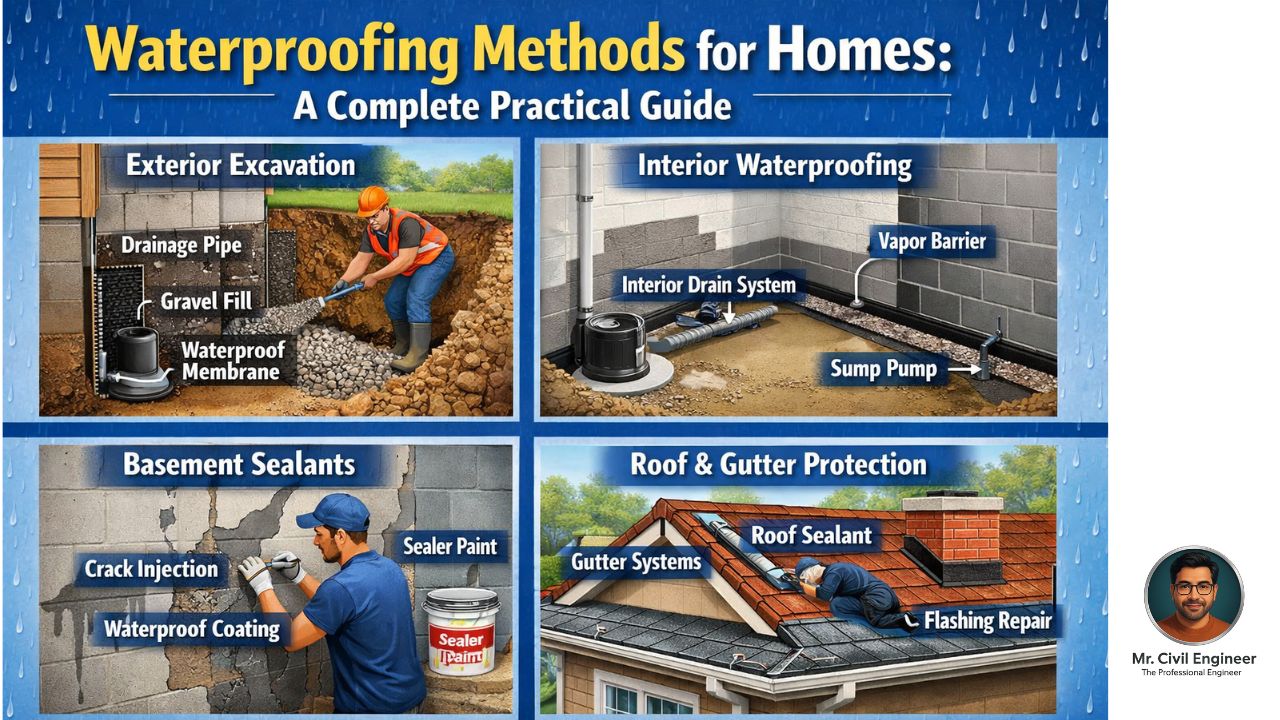

Have you ever noticed water stains on your ceiling just after the first monsoon rain?
Or paint peeling off your walls within a year of construction?
You’re not alone.
In India, over 70% of residential buildings face seepage or leakage problems within the first 5 years—mostly due to poor or improper waterproofing. Waterproofing isn’t just a finishing task; it’s a structural necessity.
Let’s understand the best waterproofing methods for homes, explained simply and practically.
What Is Waterproofing & Why Is It Important?
Waterproofing is the process of preventing water from entering a building structure. It protects concrete, masonry, and interiors from moisture damage.
Why Waterproofing Is Critical
- Prevents cracks & corrosion of steel
- Increases building lifespan
- Stops dampness, fungus & mold growth
- Saves repair costs in the long run
- Improves indoor air quality
Think of waterproofing like an umbrella for your house—ignore it, and damage is guaranteed.
Common Areas in Homes That Need Waterproofing
- Terrace / Roof – Maximum exposure to rain & heat
- Bathrooms & Toilets – Continuous water usage
- External Walls – Rainwater penetration
- Basements – Groundwater pressure
- Water Tanks – Constant water storage
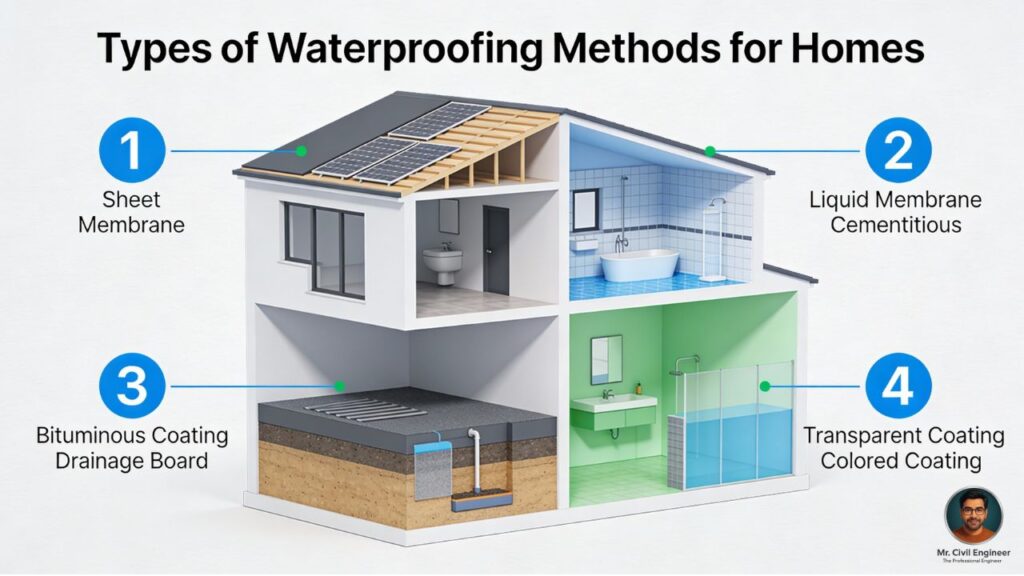
Types of Waterproofing Methods for Homes
1️⃣ Cementitious Waterproofing
- Most commonly used
- Easy to apply
- Suitable for bathrooms & water tanks
✔ Affordable
❌ Not flexible—can crack over time
2️⃣ Liquid Membrane Waterproofing
- Applied like paint
- Forms a flexible rubber-like layer
✔ Ideal for terraces
✔ Seamless application
3️⃣ Bituminous Waterproofing
- Asphalt-based coating
- Common in low-cost construction
✔ Good water resistance
❌ Degrades under sunlight
4️⃣ Membrane Waterproofing (Sheet Membranes)
- Pre-formed sheets applied on surface
✔ High durability
❌ Requires skilled labor
5️⃣ Crystalline Waterproofing
- Reacts chemically with concrete
- Blocks pores permanently
✔ Long-lasting
✔ Ideal for basements
6️⃣ Polyurethane Waterproofing
- Highly elastic
- Used in premium projects
✔ Excellent for roofs
❌ Costly
Best Waterproofing Methods for Indian Homes (Area-Wise)
| Area | Recommended Method |
|---|---|
| Terrace | Liquid membrane / PU coating |
| Bathroom | Cementitious + membrane |
| External Walls | Elastomeric coating |
| Basement | Crystalline waterproofing |
| Water Tank | Food-grade cementitious |
Common Waterproofing Mistakes to Avoid
🚫 Applying waterproofing on dirty surfaces
🚫 Ignoring proper slope on terraces
🚫 Using interior products on exterior walls
🚫 Skipping curing time
🚫 Choosing low-cost, short-life solutions
Waterproofing Cost in India (Approx.)
| Area | Cost (₹/sq.ft) |
|---|---|
| Terrace | ₹120 – ₹250 |
| Bathroom | ₹80 – ₹150 |
| External Walls | ₹60 – ₹120 |
| Basement | ₹200 – ₹400 |
💡 Costs vary based on product, area, and labor.
How to Choose the Right Waterproofing Method
Ask yourself:
- Which area needs protection?
- How much water exposure?
- Budget vs lifespan?
- New construction or repair?
👉 Always prioritize long-term durability over short-term savings.
FAQs
Q1. Is waterproofing permanent?
👉 Proper waterproofing lasts 8–15 years depending on material.
Q2. Best season for waterproofing?
👉 Summer or dry season before monsoon.
Q3. Can waterproofing be done on old buildings?
👉 Yes, with proper surface treatment.
Final Thoughts
Waterproofing is not an expense—it’s an investment.
A well-protected home stays stronger, healthier, and maintenance-free for years.
If you’re building or repairing a home, never compromise on waterproofing quality—especially in India’s harsh climate.
- Building Approval Process in India 2026: Step-by-Step Guide
- How AI Is Transforming Civil Engineering: Top AI Tools You Must Know
- How to Start Your Own Construction Company in India: Step-by-Step Guide 2026
- Civil Work Cost Breakdown per Square Feet in India (2026)
- Practical Load Calculation for Residential Buildings: Step-by-Step Guide with Examples