
Of all the stages in concrete construction, curing is the easiest one to shortcut — because unlike pouring or finishing, it produces no visible progress. The structure already looks complete the day after pouring, which makes it tempting to consider the job done. In reality, the concrete has only just begun the process that determines its final strength.
What Curing Actually Does
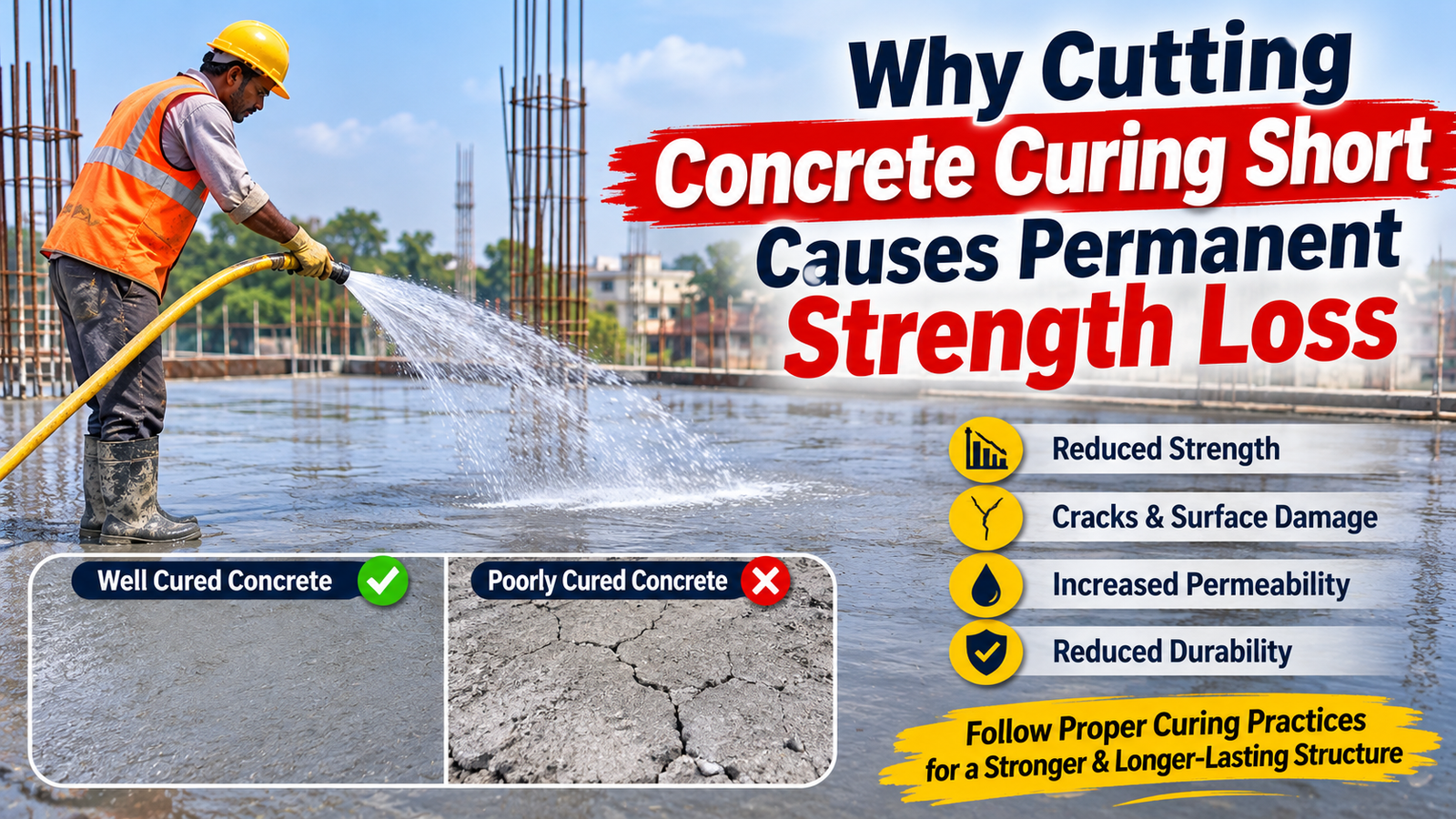
Concrete doesn’t gain strength simply by drying — it gains strength through hydration, a chemical reaction between cement and water that continues as long as sufficient moisture remains available. Interrupting this process early doesn’t pause strength gain temporarily; it stops it permanently at whatever point the concrete had reached.
Why Early Drying Is the Enemy, Not the Goal
A common misconception on site is that concrete needs to “dry out” to become strong. The opposite is true — premature drying halts hydration and leaves the concrete weaker than its design strength, even though it looks perfectly solid and finished on the surface.
How Much Curing Time Is Actually Needed
The 7-Day Minimum
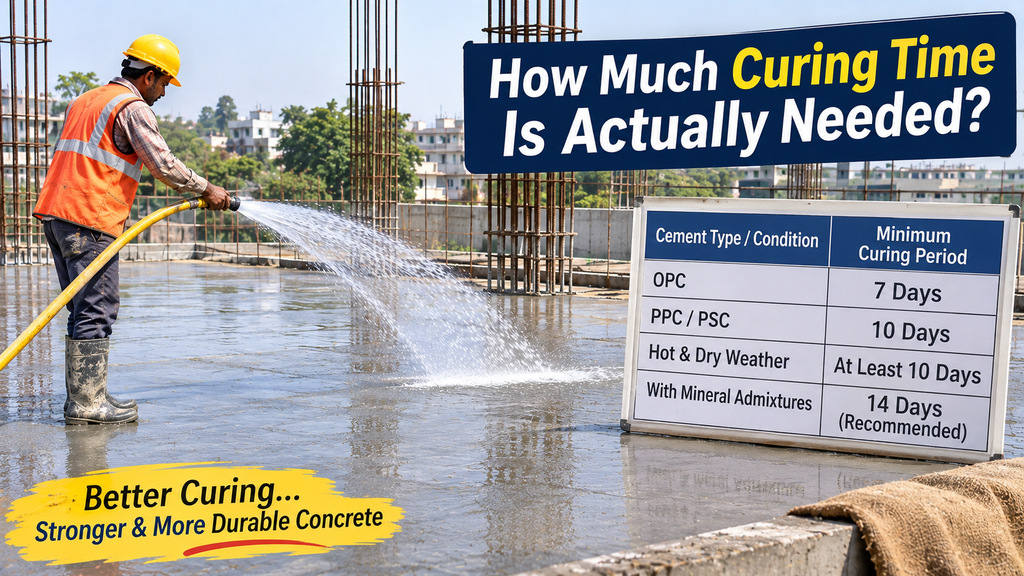
For standard OPC (Ordinary Portland Cement) concrete under normal conditions, a minimum of 7 days of continuous moist curing is required to reach a meaningful proportion of design strength.
Extended Curing for Slabs and Exposed Elements
Elements exposed directly to sun and wind — particularly slabs — lose moisture faster and benefit from extended curing of 10 to 14 days. The larger exposed surface area accelerates evaporation, making consistent moisture harder to maintain without deliberate effort.
Why Curing Gets Cut Short on Real Sites
No Visible Task to Show for It
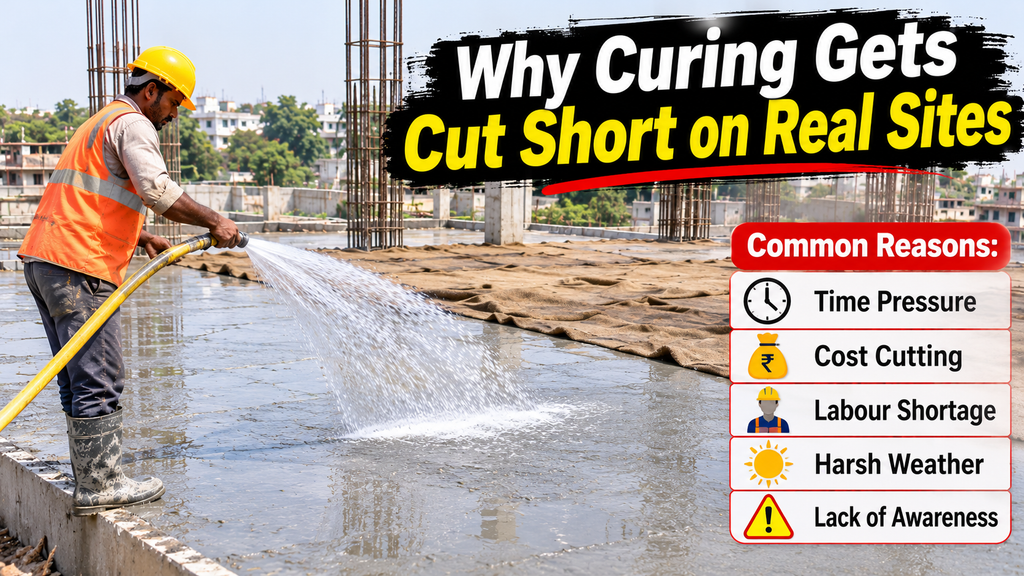
Unlike formwork removal or finishing work, curing looks the same on day one as it does on day seven from a distance — just wet concrete. This makes it easy to deprioritize when a site is focused on visible progress for a client or supervisor walkthrough.
Labor and Water Logistics
Maintaining moisture for a week requires consistent manpower and water supply, which competes with other site priorities, especially on projects with tight labor budgets.
General Instructions Without Individual Accountability
Curing is often assigned as a vague instruction to “the labor team” rather than to one named individual, which in practice means nobody feels directly responsible for making sure it happens consistently every day.
Practical Curing Methods for Site Use
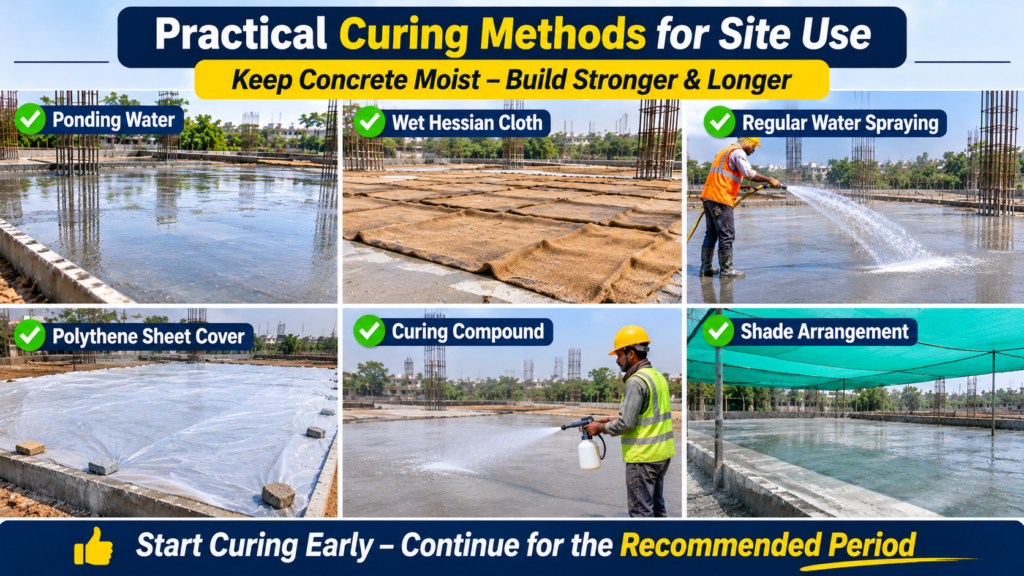
Ponding
For flat horizontal surfaces like slabs, building a small water barrier around the edges and keeping it filled with water is one of the most effective and low-cost curing methods.
Wet Gunny Bags or Hessian Cloth
Covering vertical or irregular surfaces with wet gunny bags, re-wetted regularly, works well for columns, beams, and walls where ponding isn’t practical.
Curing Compounds
Chemical curing compounds form a membrane over the concrete surface that reduces moisture loss, useful in situations where continuous water supply is logistically difficult.
How to Make Curing Actually Happen on Site
The most effective fix isn’t a new technique — it’s assigning curing as a specific, named responsibility rather than a general instruction. One person checking and re-wetting the surface daily, with a simple log noting which day of curing each element is on, dramatically improves consistency compared to an informal approach.
Conclusion
Curing doesn’t require expensive materials or specialized skill — it requires discipline over a period of days when the visible work already looks complete. Because the strength lost from inadequate curing cannot be recovered later, this is one of the highest-value, lowest-cost practices to get right on any construction site.
Key takeaway: Treat curing as a mandatory 7-14 day task with named individual responsibility, not an optional step that ends once the concrete looks set.
Related Reading: