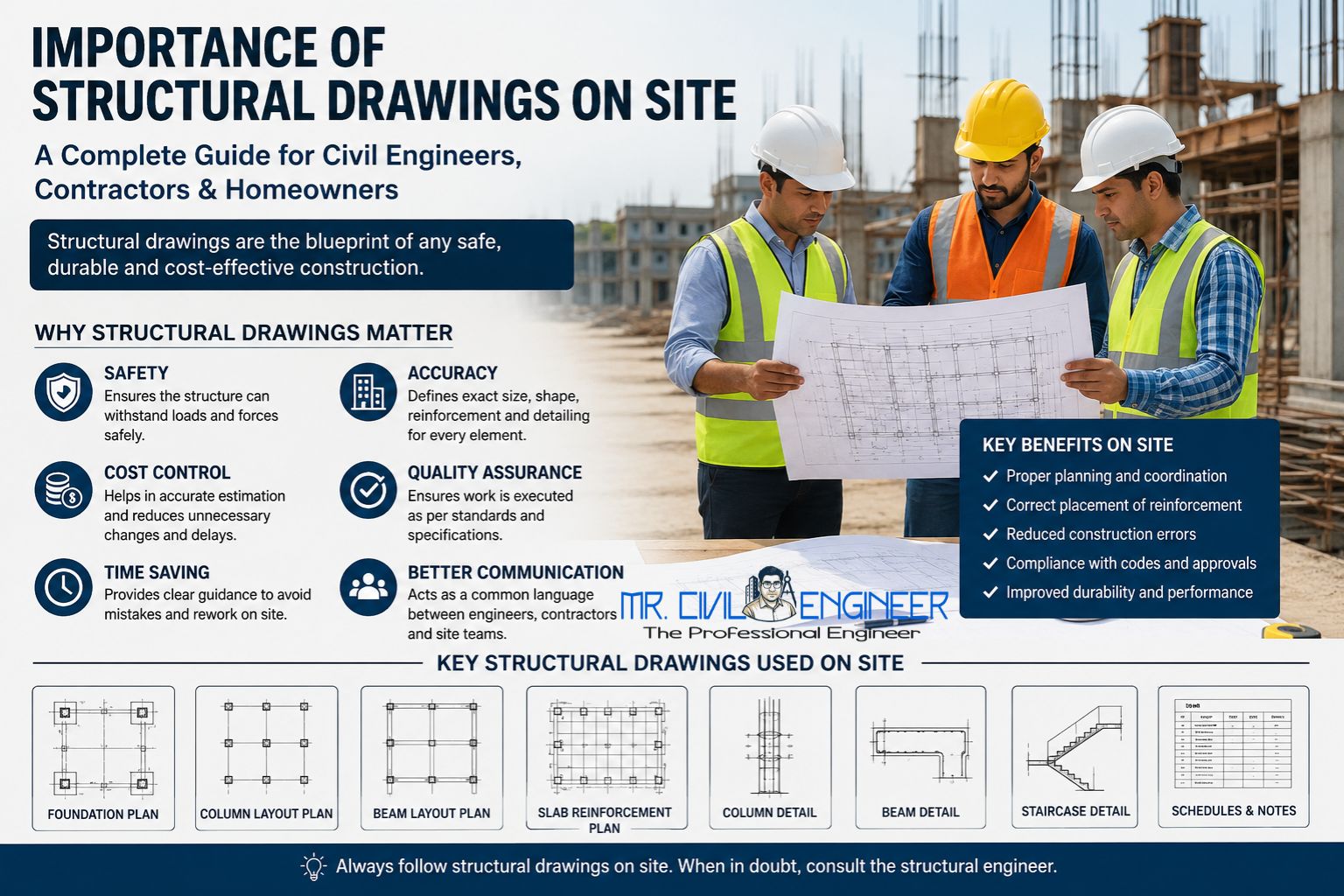

Construction projects look simple from the outside, but behind every safe and durable building lies detailed planning and precise execution. One of the most important parts of this planning is the structural drawing.
Whether it is a residential house, commercial building, school, hospital, or high-rise tower, structural drawings act as the backbone of the entire construction process. Without proper structural drawings on site, even a beautifully designed building can face serious problems such as cracks, beam failure, uneven settlement, or even collapse.
Unfortunately, many small contractors and homeowners underestimate the value of structural drawings. Some rely only on verbal instructions or architectural layouts. This often leads to costly mistakes, delays, unsafe construction, and material wastage.
In this article, you will learn:
- What structural drawings are
- Why structural drawings are important on site
- How they help engineers, contractors, and workers
- Common mistakes related to structural drawings
- Practical site examples
- Pro tips from industry experience
- SEO-friendly FAQs for better understanding
This detailed guide is written in simple language so beginners, site supervisors, civil engineers, contractors, and homeowners can understand the topic clearly.
What Are Structural Drawings?
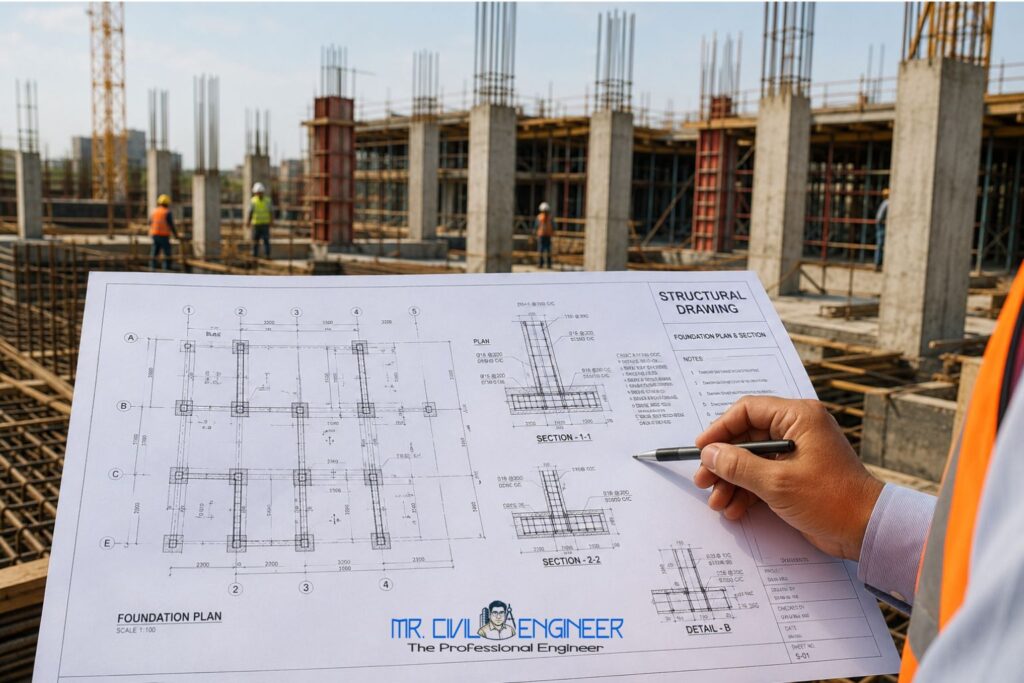
Structural drawings are technical drawings prepared by a structural engineer that show how the building structure should be constructed safely.
These drawings contain complete details of:
- Footings and foundations
- Columns
- Beams
- Slabs
- Staircases
- Reinforcement details
- Steel bar sizes and spacing
- Structural dimensions
- Load-bearing elements
They help the construction team understand exactly how structural components should be built on site.
Unlike architectural drawings that focus on appearance and space planning, structural drawings focus on strength, stability, and safety.
Why Structural Drawings Are Important on Site
1. Ensure Structural Safety
The biggest purpose of structural drawings is safety.
A building carries different types of loads such as:
- Dead load
- Live load
- Wind load
- Seismic load
- Water load
Structural drawings ensure that all these loads are transferred safely to the foundation.
For example:
If reinforcement bars are placed incorrectly in beams or slabs, the structure may develop cracks after a few years. In severe cases, partial collapse may occur.
Structural drawings prevent such dangerous mistakes.
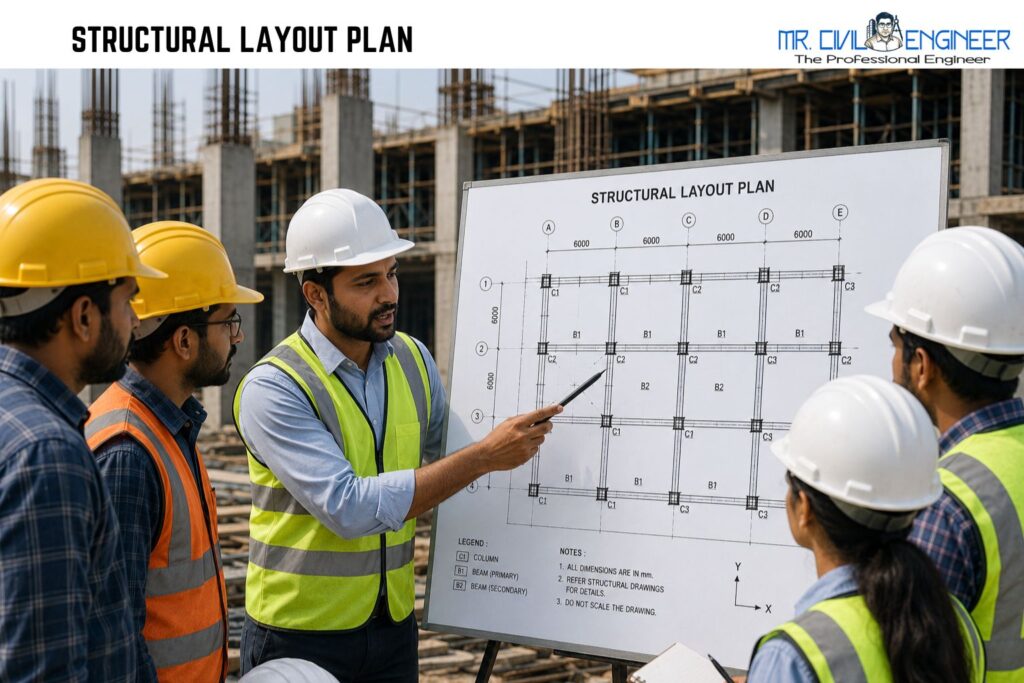
2. Help Workers Understand Construction Properly
On construction sites, laborers and supervisors need clear instructions.
Structural drawings provide exact details such as:
- Beam depth
- Column size
- Steel reinforcement spacing
- Slab thickness
- Footing dimensions
Without drawings, workers may guess measurements, which can create major structural problems.
A properly detailed drawing reduces confusion and improves work accuracy.
3. Reduce Construction Errors
Construction mistakes are expensive.
Incorrect beam placement, wrong steel diameter, or improper footing size can lead to:
- Rework
- Project delays
- Material wastage
- Increased labor cost
Structural drawings minimize these risks because every detail is clearly mentioned.
For example:
If a slab reinforcement drawing specifies 12mm bars at 150mm c/c spacing, the contractor cannot randomly use 10mm bars at wider spacing.
This maintains construction quality.
4. Improve Coordination Between Teams
Construction projects involve multiple professionals:
- Architects
- Structural engineers
- Contractors
- MEP consultants
- Site supervisors
Structural drawings help coordinate work among all teams.
For example:
- The architect decides room layout
- The structural engineer designs load-bearing members
- MEP consultants place electrical and plumbing services
Without coordination through drawings, clashes may occur on site.
5. Save Time During Construction
Time is money in construction.
When structural drawings are available on site:
- Workers know what to do
- Site engineers avoid repeated calculations
- Material planning becomes easier
- Construction speed improves
Projects with proper structural documentation usually progress faster than projects managed verbally.
6. Control Material Wastage
Structural drawings help estimate material quantities accurately.
This includes:
- Steel quantity
- Concrete volume
- Shuttering area
- Binding wire requirement
Accurate planning reduces unnecessary material wastage.
For example:
Incorrect reinforcement cutting due to missing bar bending schedules can waste large amounts of steel.
7. Assist in Quality Control
Quality checks on site become easier when drawings are available.
Site engineers can compare actual work with structural drawings.
Important checks include:
- Steel placement
- Cover block spacing
- Beam dimensions
- Lap lengths
- Concrete cover
This ensures the structure is built according to engineering standards.
8. Essential for Government Approvals
In many regions, structural drawings are mandatory for:
- Municipal approvals
- Structural stability certificates
- Completion certificates
- Building permissions
Authorities verify whether the building complies with safety codes.
Without approved structural drawings, projects may face legal complications.
9. Improve Earthquake Resistance
In earthquake-prone zones, structural drawings become even more important.
Structural engineers design:
- Beam-column joints
- Shear reinforcement
- Ductile detailing
- Foundation stability
These details help the building resist seismic forces.
Ignoring structural drawings in seismic zones can be extremely dangerous.
10. Increase Building Life
A well-designed structure lasts longer.
Structural drawings ensure:
- Proper load transfer
- Correct reinforcement
- Adequate structural strength
- Crack control
This increases the overall durability and lifespan of the building.
Main Components of Structural Drawings
Foundation Layout
Foundation drawings show:
- Footing size
- Depth
- Reinforcement
- PCC details
- Column positions
This is the starting point of safe construction.
Column Layout
Column drawings include:
- Column size
- Reinforcement bars
- Stirrup spacing
- Column location
Incorrect column construction can affect the entire building.
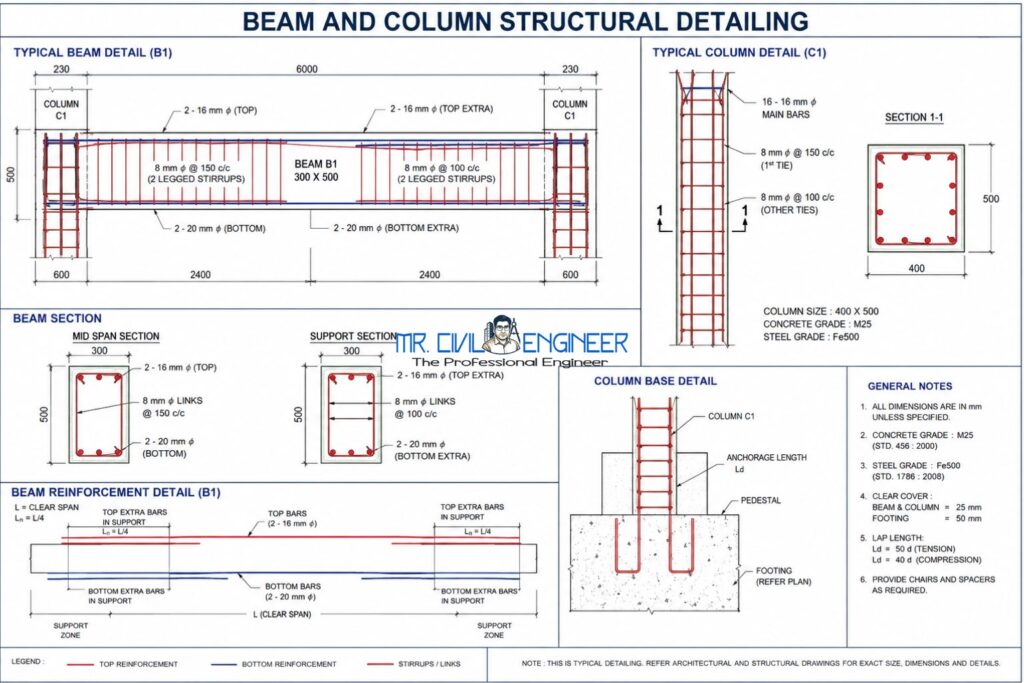
Beam Drawings
Beam drawings provide:
- Beam dimensions
- Main reinforcement
- Extra top bars
- Stirrups spacing
Beams transfer slab loads to columns.
Slab Reinforcement Drawings
Slab drawings show:
- Slab thickness
- Steel spacing
- Distribution bars
- Bent-up bars
- Opening details
These are essential before slab casting.
Staircase Drawings
Structural staircase drawings include:
- Waist slab thickness
- Reinforcement details
- Landing beam connection
Proper staircase design improves safety and durability.
Real-Life Example of Structural Drawing Importance
Imagine a contractor constructing a G+2 residential building without properly checking structural drawings.
The contractor decides to reduce beam depth to increase ceiling height.
Initially, the building looks fine.
After one year:
- Cracks appear in slabs
- Beams start sagging
- Water leakage increases
Eventually, expensive repair work becomes necessary.
This happens because structural members were modified without engineering approval.
Structural drawings are not suggestions — they are essential technical instructions.
How Structural Drawings Help Different Professionals
For Civil Engineers
Structural drawings help engineers:
- Monitor construction quality
- Verify reinforcement
- Ensure code compliance
- Maintain structural safety
For Contractors
Contractors use drawings for:
- Labor planning
- Material ordering
- Work sequencing
- Cost estimation
For Site Supervisors
Site supervisors use drawings to:
- Guide workers
- Check dimensions
- Verify reinforcement
- Avoid execution mistakes
For Homeowners
Homeowners benefit because:
- Construction becomes safer
- Building quality improves
- Future repair costs reduce
- Legal approvals become easier
Step-by-Step Use of Structural Drawings on Site
Step 1: Study Drawings Before Starting Work
Never begin construction without reviewing drawings carefully.
Understand:
- Structural notes
- Beam sizes
- Reinforcement details
- Levels and dimensions
Step 2: Mark Layout Properly
Use structural layouts for accurate marking.
Check:
- Column centerlines
- Footing positions
- Grid alignment
Even small marking errors can create major structural issues later.
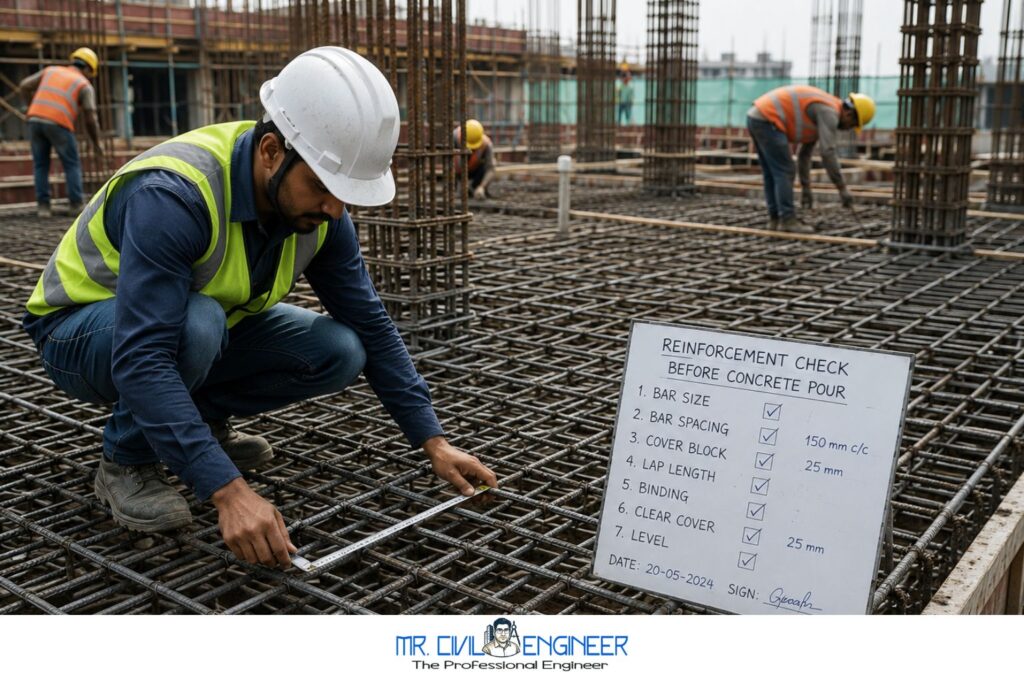
Step 3: Verify Reinforcement Before Casting
Before concrete pouring:
- Check steel diameter
- Verify spacing
- Ensure cover blocks are placed
- Confirm lap lengths
Site engineers must inspect reinforcement carefully.
Step 4: Follow Structural Notes Strictly
Drawings contain important instructions regarding:
- Concrete grade
- Steel grade
- Development length
- Construction joints
Ignoring notes can compromise safety.
Step 5: Maintain Updated Drawings
Construction drawings sometimes change during execution.
Always keep:
- Revised drawings
- Approved drawings
- Updated structural details
Using old drawings can create serious site confusion.
Common Mistakes Related to Structural Drawings
1. Ignoring Revision Updates
Many sites continue work using outdated drawings.
This can cause:
- Wrong beam construction
- Column mismatch
- Structural clashes
Always check drawing revision numbers.
2. Changing Structural Sizes Without Approval
Never reduce:
- Beam size
- Column size
- Slab thickness
without structural engineer approval.
Even small changes can affect load capacity.
3. Improper Reinforcement Placement
Common reinforcement mistakes include:
- Wrong spacing
- Insufficient cover
- Incorrect lap length
- Missing crank bars
These errors weaken the structure.
4. Poor Drawing Interpretation
Sometimes workers misunderstand drawings due to lack of training.
Site engineers should explain important details clearly.
5. Missing Structural Drawings on Site
Some small projects operate without printed structural drawings.
This increases the risk of verbal mistakes and poor workmanship.
Pro Tips From Experienced Civil Engineers
Always Laminate Important Drawings
Site conditions are dusty and wet.
Laminated drawings remain protected and readable.
Use Color Marking for Revisions
Highlight revised portions using colored markers.
This helps workers identify changes quickly.
Cross-Check Architectural and Structural Drawings
Before execution:
- Compare column locations
- Verify beam alignment
- Check slab openings
This avoids site conflicts.
Conduct Pre-Pour Inspections
Before every concrete pour:
- Inspect reinforcement
- Verify shuttering dimensions
- Check cover blocks
Never rush concreting work.
Maintain Drawing Registers
Keep a proper drawing issue register on site.
This ensures everyone uses the latest approved version.
Importance of Structural Drawings in Residential Construction
Small residential projects often ignore structural planning.
This is risky because:
- Soil conditions vary
- Local materials may differ
- Construction quality varies
Structural drawings help ensure:
- Safe foundations
- Proper reinforcement
- Long-lasting homes
Even a simple house requires proper structural design.
Importance in Commercial Buildings
Commercial structures carry higher loads due to:
- More occupants
- Heavy equipment
- Larger spans
- HVAC systems
Structural drawings become critical for:
- Safety
- Serviceability
- Durability
- Code compliance
Digital Structural Drawings and Modern Construction
Modern projects increasingly use:
- AutoCAD drawings
- BIM models
- 3D structural detailing
- Cloud-based documentation
Benefits include:
- Faster coordination
- Reduced errors
- Easy revisions
- Better visualization
Digital drawings improve project management significantly.
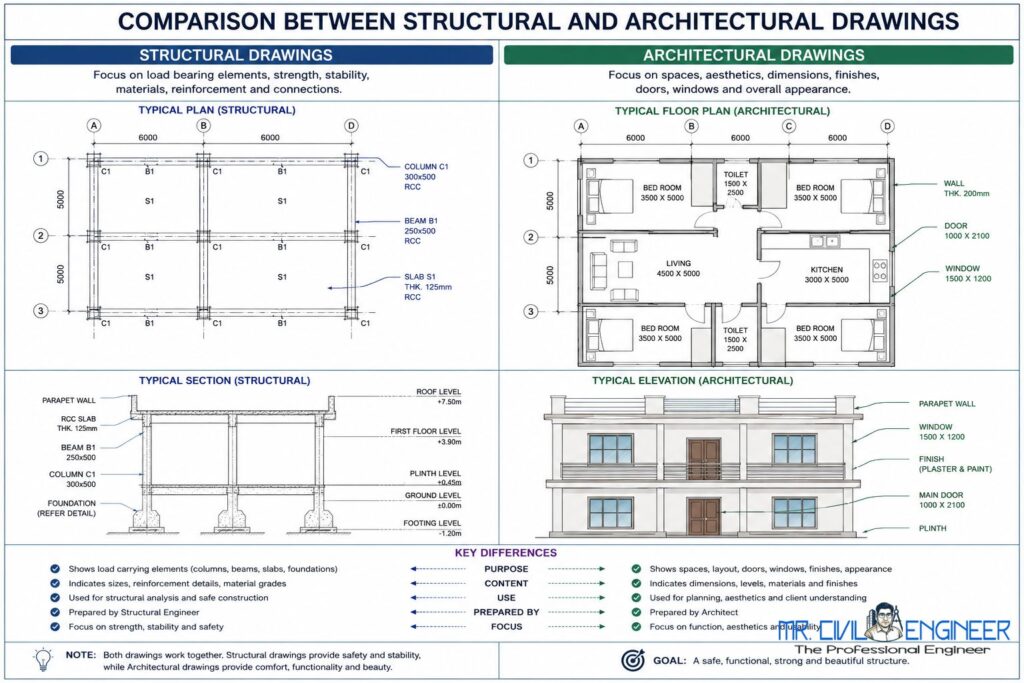
Structural Drawings vs Architectural Drawings
| Structural Drawings | Architectural Drawings |
|---|---|
| Focus on safety | Focus on appearance |
| Prepared by structural engineer | Prepared by architect |
| Show reinforcement details | Show room layouts |
| Include beam and column details | Include elevations and finishes |
| Ensure structural stability | Ensure functional planning |
Both are important and should work together.
Importance of Structural Drawings for Renovation Work
During renovation:
- Walls may be removed
- Additional floors may be added
- Openings may be modified
Without proper structural drawings, renovation work may weaken the building’s structural integrity.
Structural assessment is essential before modification work.
Role of Structural Drawings in Cost Estimation
Structural drawings help prepare accurate BOQs.
Estimators can calculate:
- Steel quantity
- Concrete volume
- Formwork area
This improves budgeting accuracy and reduces unexpected expenses.
Why Structural Drawings Are Important for Contractors
Contractors benefit because drawings:
- Reduce disputes
- Improve execution quality
- Help schedule work
- Reduce rework
- Improve professionalism
Professional contractors always rely on proper structural documentation.
Disclaimer
This article is intended for educational and informational purposes only. Structural design and construction should always be carried out under the supervision of qualified civil and structural engineers according to local building codes and standards.
Conclusion
Structural drawings are one of the most important documents on any construction site. They are not just technical papers — they are detailed engineering instructions that ensure a building remains safe, stable, and durable for many years.
From foundation layout to slab reinforcement, every structural element depends on accurate drawings and proper execution.
Ignoring structural drawings may save a little time initially, but it can create serious safety risks, expensive repairs, legal issues, and construction failures in the future.
Whether you are a civil engineer, contractor, site supervisor, or homeowner, understanding the importance of structural drawings can help you achieve better construction quality, improved safety, and long-term durability.
In modern construction, successful projects are built not only with concrete and steel — but with proper planning, coordination, and engineering documentation.
FAQs
1. What is the purpose of structural drawings in construction?
Structural drawings provide detailed information about foundations, columns, beams, slabs, and reinforcement to ensure safe and accurate construction.
2. Why are structural drawings important on site?
Structural drawings help prevent construction mistakes, improve safety, guide workers, and ensure the building can safely carry loads.
3. Who prepares structural drawings?
Structural drawings are prepared by qualified structural engineers based on building loads, soil conditions, and design requirements.
4. Can construction be done without structural drawings?
Construction without structural drawings is risky and can lead to unsafe structures, cracks, structural failure, and legal issues.
5. What is the difference between architectural and structural drawings?
Architectural drawings focus on design and appearance, while structural drawings focus on strength, stability, and reinforcement details.
Read These Article Also
Roof Waterproofing Solutions in India – Complete Guide
How to Design an Underground Bunker: Step-by-Step Guide 2026
Soil Bearing Capacity Explained Simply (Civil Engineering Guide)