
You’re sitting in your living room when your eyes suddenly catch a thin line running across the wall. Yesterday it wasn’t there. Today, it is clearly visible. Your first thought is usually:
“Is my house safe?”
Wall cracks are one of the most common problems in buildings. Almost every house develops some form of crack over time. Some cracks are harmless and only affect appearance, while others indicate serious structural issues.
Understanding the common causes of wall cracks and their repairs helps you take the right action at the right time.
In this guide, you will learn:
- Why wall cracks occur
- Types of cracks and their meaning
- Which cracks are dangerous
- How to repair wall cracks properly
What Are Wall Cracks?
Wall cracks are visible separations or fractures in plaster, brickwork, or concrete surfaces.
Cracks form because buildings are not rigid blocks — they expand, contract, settle, and age. These movements create stress in walls, and cracks appear where the stress is released.
Two Broad Categories:
- Non-structural cracks – affect plaster only
- Structural cracks – affect the building’s strength
Knowing the difference is the key to safe repair.
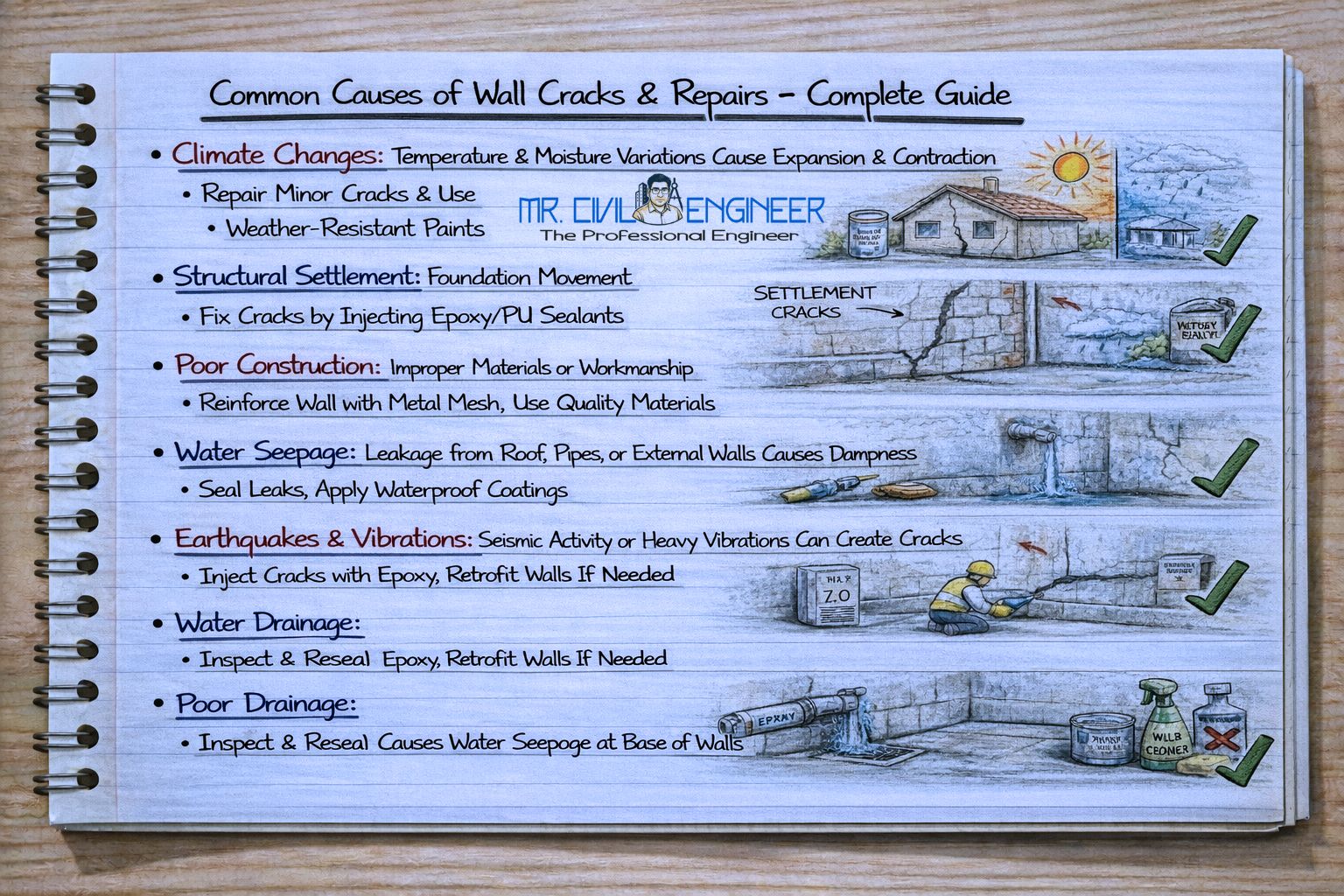
Common Causes of Wall Cracks
1. Shrinkage of Materials
Concrete and plaster shrink as they dry.
If curing is poor or material quality is low, shrinkage cracks appear.
➡ Usually thin and shallow
➡ Common in new buildings
2. Thermal Movement
Materials expand in heat and contract in cold.
In hot climates, repeated temperature changes cause stress.
➡ Leads to long cracks
➡ More common on external walls
3. Foundation Settlement
If soil below the foundation settles unevenly, cracks appear.
➡ Diagonal cracks
➡ Usually near doors and windows
➡ May grow with time
4. Poor Construction Practices
- Low cement content
- Improper curing
- Weak mortar
- Incorrect reinforcement
➡ Results in early cracking
➡ Mostly seen in low-quality buildings
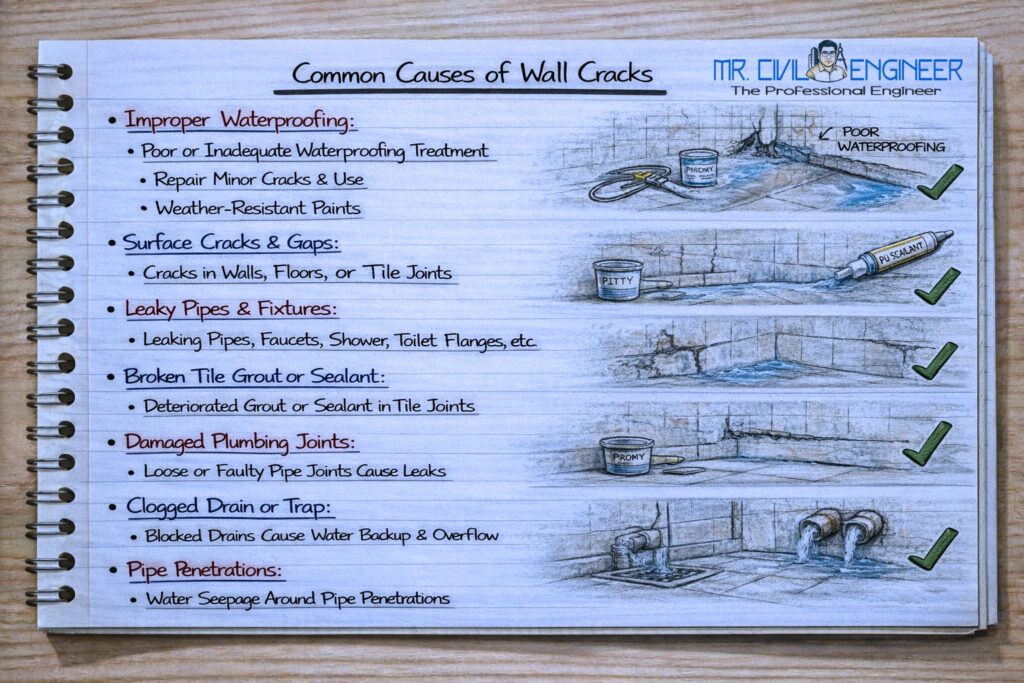
5. Moisture & Water Seepage
Water weakens plaster and masonry.
➡ Causes damp patches
➡ Leads to peeling paint
➡ Creates cracks over time
6. Overloading
Extra load from additional floors or heavy structures can cause stress.
➡ Vertical or diagonal cracks
➡ Dangerous if ignored
Types of Wall Cracks (By Pattern)
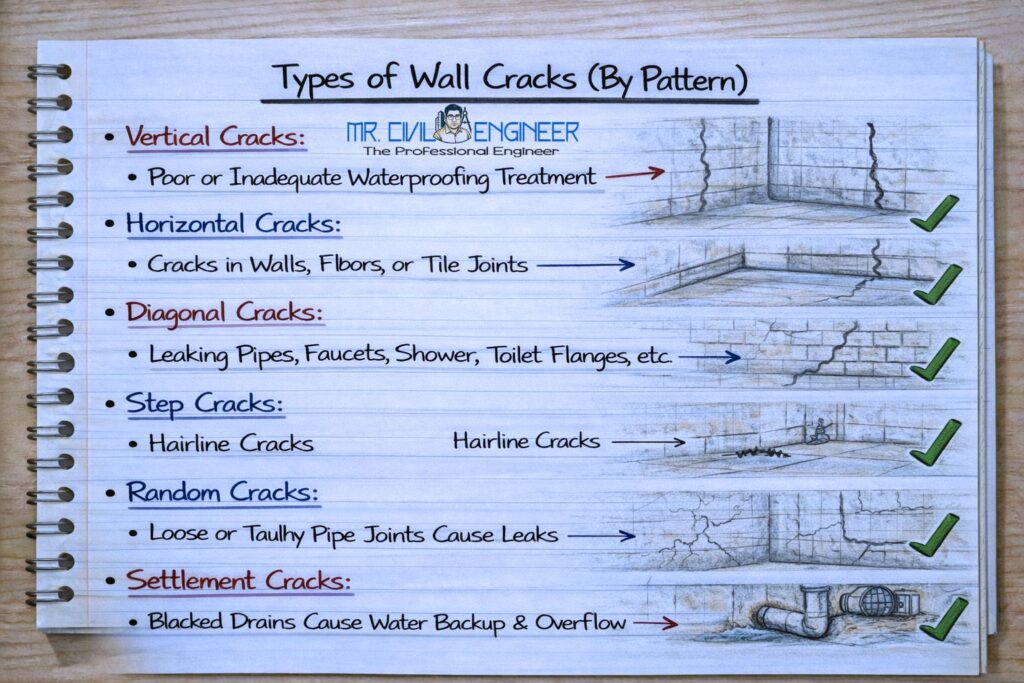
1. Vertical Cracks
- Usually due to shrinkage
- Mostly harmless
- Common in plaster
2. Horizontal Cracks
- May indicate structural movement
- More serious than vertical cracks
3. Diagonal Cracks
- Often due to settlement
- Appear near doors and windows
4. Hairline Cracks
- Very thin
- Mostly cosmetic
- Easy to repair
5. Step Cracks
- Follow brick joints
- Indicate foundation movement
Which Cracks Are Dangerous?
Not all cracks are dangerous. Use this simple checklist:
| Sign | Meaning |
|---|---|
| Crack width > 3 mm | Serious |
| Crack growing with time | Dangerous |
| Diagonal or horizontal crack | Structural |
| Crack with dampness | Needs urgent repair |
| Crack near beam/column | Structural |
👉 If in doubt, consult a structural engineer.
Repair Methods for Wall Cracks
1. Hairline Crack Repair
- Clean the crack
- Apply crack filler or putty
- Sand and repaint
Best for: cosmetic cracks
2. Structural Crack Repair
- Widen crack slightly
- Inject epoxy or polymer grout
- Provide stitching if needed
Best for: load-related cracks
3. Dampness-Related Crack Repair
- Stop water source
- Apply waterproof coating
- Repair plaster
Best for: bathroom & external walls
Step-by-Step Wall Crack Repair Process
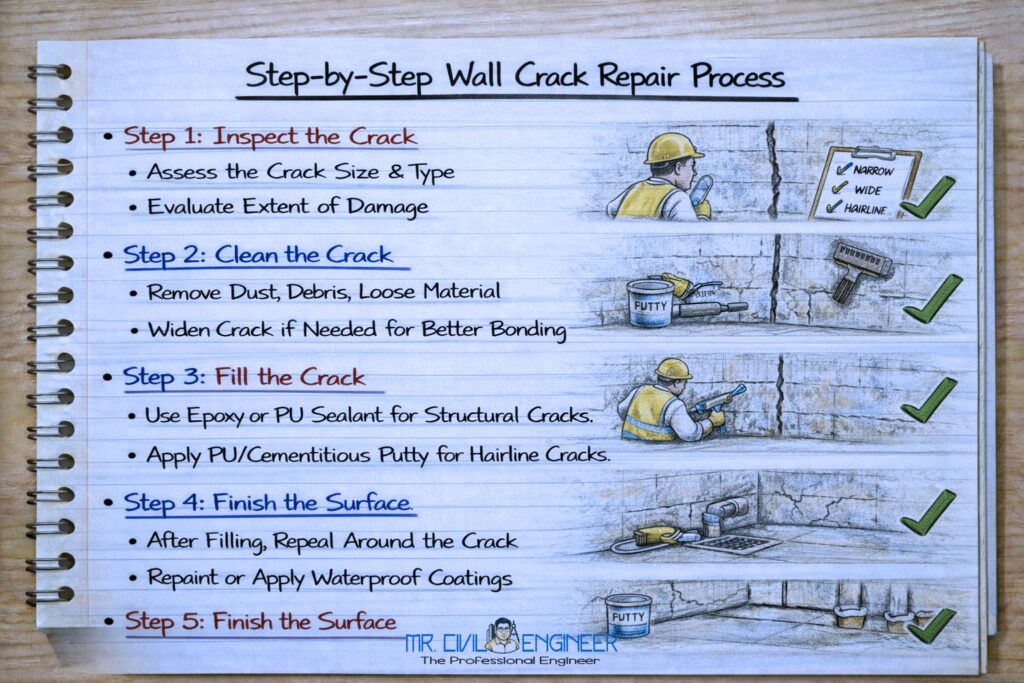
Step 1: Inspect the Crack
- Measure width
- Check direction
- Monitor growth
Step 2: Clean the Crack
- Remove loose material
- Use wire brush
- Blow out dust
Step 3: Fill the Crack
- Use filler for small cracks
- Use epoxy for structural cracks
Step 4: Finish the Surface
- Apply putty
- Sand smooth
- Repaint
Prevention Tips
✔ Proper curing of concrete
✔ Use quality materials
✔ Provide control joints
✔ Ensure proper drainage
✔ Do not overload structure
✔ Regular inspection
FAQs
Q1. Are wall cracks normal?
Yes, minor hairline cracks are normal in most buildings.
Q2. Which wall cracks are dangerous?
Diagonal and widening cracks are dangerous.
Q3. Can I repair wall cracks myself?
Small cracks can be DIY repaired. Structural cracks need professionals.
Q4. Do cracks mean building collapse?
Not always. But some cracks indicate serious issues.
Conclusion
Wall cracks are not just an aesthetic problem — they are messages from your building. Some say, “I am aging normally,” while others warn, “I need urgent care.”
By understanding the common causes of wall cracks and their repairs, you can protect your home, prevent major damage, and save money in the long run.
Do not ignore cracks. Inspect them, understand them, and repair them properly — your building will thank you.