
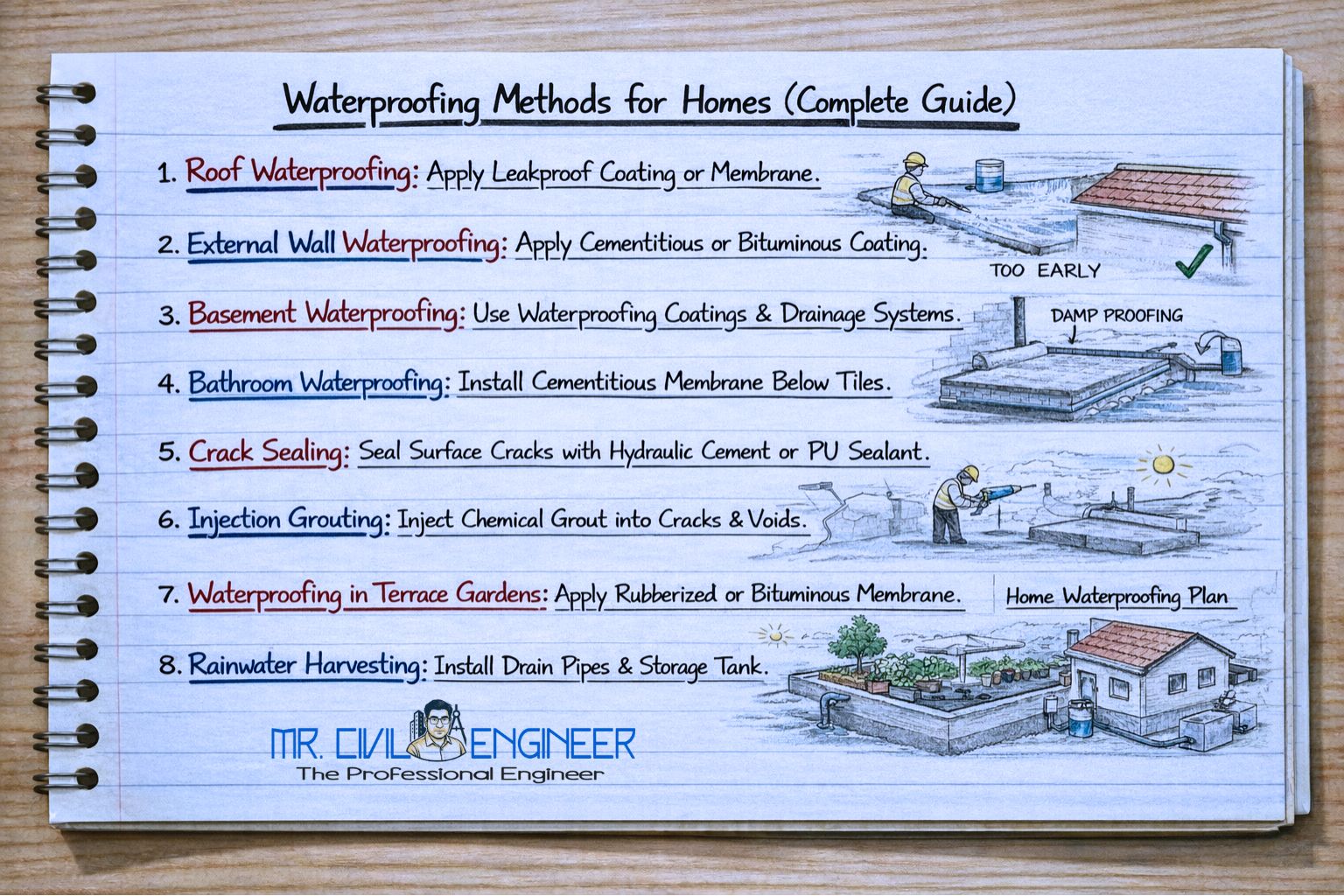

Have you ever noticed dark patches on your walls after the rainy season? Or paint peeling off your ceiling? These are not just cosmetic problems—they are warning signs of water damage. Waterproofing is one of the most important yet most ignored parts of home construction and maintenance.
Whether you are building a new house or repairing an old one, choosing the right waterproofing method can save you from expensive repairs, health problems, and structural damage. This complete guide will help you understand different waterproofing methods for homes in simple language and show you where and how each one is used.
What Is Waterproofing?
Waterproofing is the process of making a surface resistant to water penetration. It involves applying special materials or treatments that stop water from entering walls, roofs, floors, or basements.
Think of waterproofing like a raincoat for your house. Just as a raincoat protects you from getting wet, waterproofing protects your building from moisture and leakage.
Why Homes Need Waterproofing
Water may look harmless, but over time it can destroy a building from the inside.
Problems caused by water leakage:
- Cracks in walls and ceilings
- Rusting of steel reinforcement
- Weakening of concrete
- Mold and fungus growth
- Bad indoor air quality
- Damage to furniture and paint
- Reduced property value
According to building maintenance studies, nearly 80% of building defects are related to water leakage. This makes waterproofing not optional—but essential.
Major Waterproofing Methods for Homes
Let’s explore the most common and effective waterproofing methods used in residential buildings.
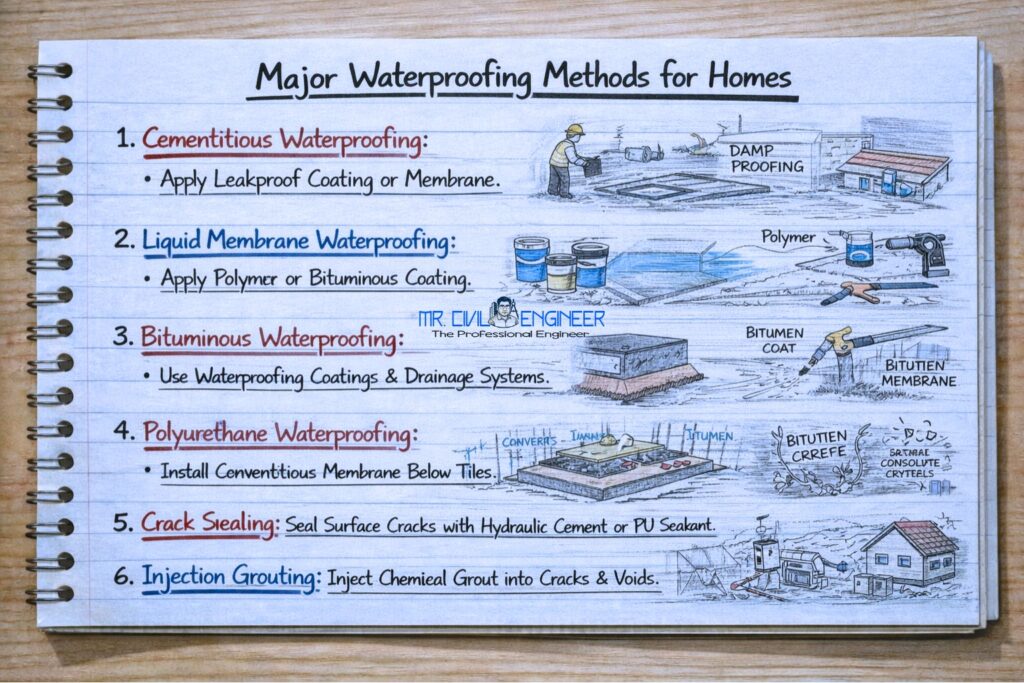
1. Cementitious Waterproofing
This is the simplest and most commonly used method.
How it works:
A cement-based waterproofing compound is mixed with water and applied to surfaces like plaster.
Best used for:
- Bathrooms
- Toilets
- Water tanks
- Basements
Advantages:
- Easy to apply
- Affordable
- Good for internal wet areas
Limitations:
- Not flexible
- May crack if structure moves
2. Liquid Membrane Waterproofing
This method uses liquid coating materials that dry into a rubber-like membrane.
Best used for:
- Roofs and terraces
- Balconies
- Wet areas
Advantages:
- Flexible
- Seamless
- Covers cracks easily
Limitations:
- Needs skilled application
- Surface must be clean and dry
3. Bituminous Waterproofing
Bitumen-based products are widely used for roof protection.
Best used for:
- Flat roofs
- Foundations
- Basements
Advantages:
- Strong water resistance
- Long-lasting
- Cost-effective
Limitations:
- Can become brittle in extreme heat
- Not very eco-friendly
4. Polyurethane Waterproofing
This is a modern, high-performance waterproofing solution.
Best used for:
- Terraces
- Exposed roofs
- Industrial areas
Advantages:
- Highly flexible
- UV resistant
- Long service life
Limitations:
- Expensive
- Needs expert handling
5. Crystalline Waterproofing
This method uses chemicals that react with moisture and form crystals inside concrete pores.
Best used for:
- Basements
- Foundations
- Water tanks
Advantages:
- Becomes part of concrete
- Self-healing ability
- Long-lasting
Limitations:
- Works only with concrete
- Not suitable for plaster surfaces
6. Injection Grouting
This is mainly used for repair work.
How it works:
Special chemicals are injected into cracks to stop leakage from inside.
Best used for:
- Wall cracks
- Basement leakage
- Underground structures
Advantages:
- Quick repair
- No demolition needed
Limitations:
- Localized solution
- Needs skilled technicians
Area-Wise Waterproofing Solutions
Different parts of a house need different waterproofing approaches.
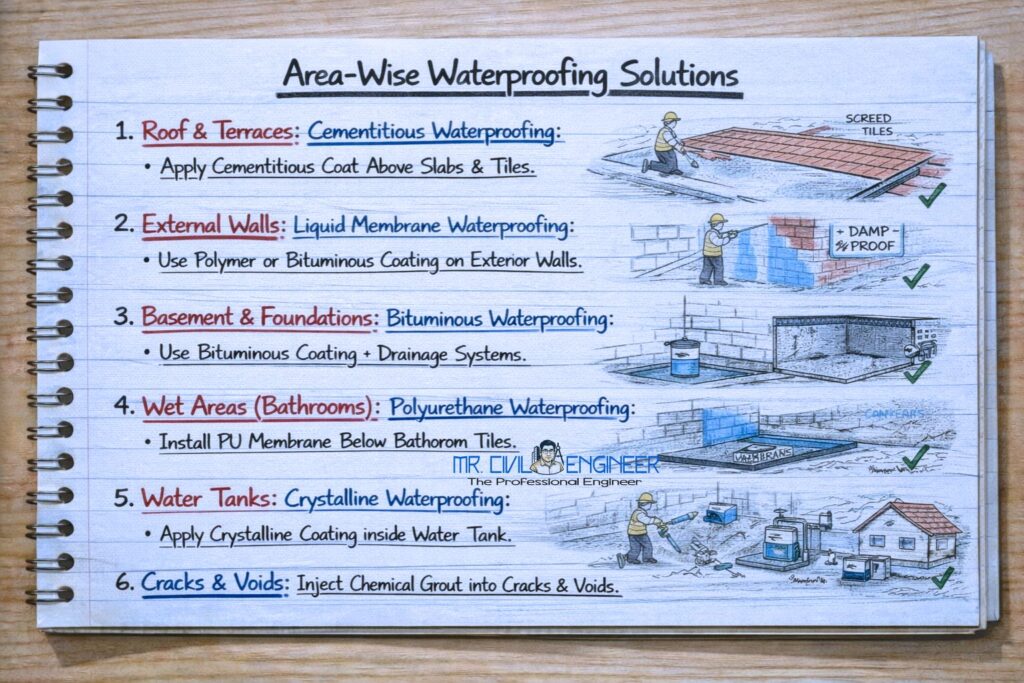
Roof & Terrace
- Liquid membrane
- Polyurethane coating
- Bituminous sheets
Bathroom & Kitchen
- Cementitious waterproofing
- Liquid membrane before tiling
Basement
- Crystalline waterproofing
- Bituminous membrane
- Injection grouting (for repairs)
External Walls
- Waterproof plaster
- Weather-resistant coatings
Water Tanks
- Cementitious or crystalline waterproofing
How to Choose the Right Waterproofing Method
Choosing the correct method depends on several factors:
1. Surface Type
Concrete, brick, or plaster surfaces need different treatments.
2. Location
Roof, bathroom, basement, and walls require different solutions.
3. Budget
Some methods are affordable, while others are premium long-term investments.
4. Climate
High rainfall areas need stronger waterproofing systems.
5. New Construction vs Repair
Preventive waterproofing is cheaper than repair waterproofing.
Common Waterproofing Mistakes
Many failures happen because of small errors:
- Applying waterproofing on dusty surfaces
- Skipping slope on terrace
- Using cheap materials
- No curing time
- Ignoring expansion joints
- Not testing for leakage
Waterproofing is not just about material—it’s about proper method and execution.
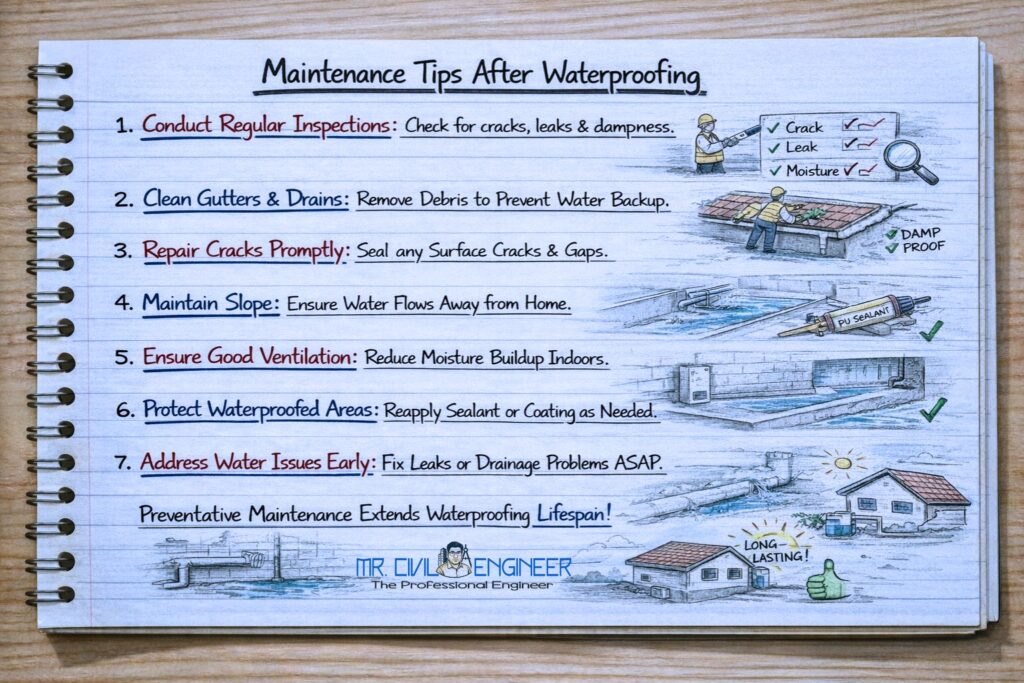
Maintenance Tips After Waterproofing
- Inspect roof every year
- Clear terrace drains
- Repair cracks immediately
- Recoat protective layers after 5–7 years
- Avoid drilling in waterproofed areas
Frequently Asked Questions (FAQs)
Q1. Which waterproofing method is best for roofs?
Liquid membrane and polyurethane coatings are best for roofs and terraces.
Q2. Is waterproofing needed for new houses?
Yes. Preventive waterproofing during construction saves huge repair costs later.
Q3. How long does waterproofing last?
Depending on material, it can last 5–15 years.
Q4. Can waterproofing stop existing leakage?
Yes, methods like injection grouting and membrane coatings can stop leakage.
Conclusion
Waterproofing is not a luxury—it is a necessity for every home. From roofs to bathrooms and basements, each part of your house needs proper protection from moisture. Choosing the right waterproofing method based on location, budget, and structure can protect your home for years.
A well-waterproofed home stays stronger, cleaner, and more valuable. Think of waterproofing as an investment, not an expense—because water damage always costs more than prevention.
Latest Articles
- Formwork Calculation Basics: A Complete Beginner’s Guide
- How to Reduce Construction Cost Without Quality Loss
- Curing Methods in Concrete: Types, Importance & Best Practices
- Safety Measures on Construction Site: What Every Engineer Must Know
- Construction Joints – Types & Location (Complete RCC Guide)



[…] Waterproofing Methods for Homes (Complete Guide) […]